

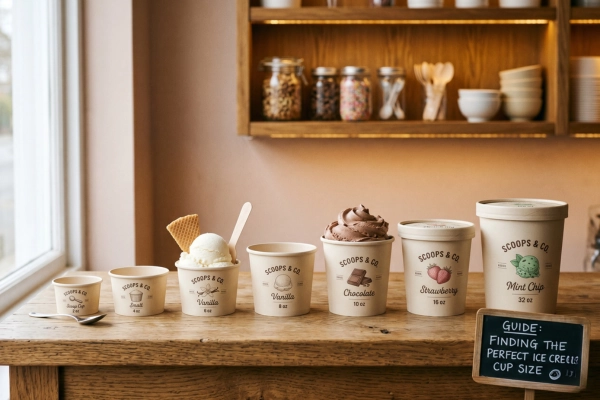
Ice Cream Cup: How to Choose the Right Size for Your Business
There’s something universally joyful about a perfectly served scoop of ice cream — but here’s the thing most ice cream parlor owners and cafe managers overlook: the cup matters just as much as the scoop. Choose a cup that’s too small and your customer feels shortchanged. Too large and your portions look skimpy, your costs creep up, and your presentation suffers.
Choosing the right ice cream cup size is one of those small decisions that quietly shapes your customer experience, your profit margins, and your brand image — every single day.
Whether you’re running a busy ice cream parlor, a cafe dessert menu, a restaurant, or a food stall, this ice cream cup sizes guide will walk you through everything you need to know — from oz and ml measurements to material types, portion sizes, and practical buying tips.
Let’s scoop right in.
🍦 Why Ice Cream Cup Size Is More Important Than You Think
Most business owners focus on the ice cream itself — the flavors, the toppings, the display freezer. But the ice cream serving cup is the first physical thing your customer interacts with. It sets expectations before the first bite.
Here’s why ice cream cup selection directly impacts your business:
- Portion consistency — The right cup size standardizes every serving, reducing waste and over-portioning
- Customer satisfaction — A well-filled cup feels generous; an oversized cup with a small scoop feels disappointing
- Cost control — Larger cups mean more product per serving, which adds up fast at scale
- Presentation — Cup shape, size, and material affect how the ice cream looks and how long it stays cold
- Brand perception — A quality cup signals a quality product, even before the first taste
In short, the best ice cream cup size for your business isn’t just about volume — it’s a strategic decision.
📏 Ice Cream Cup Size Chart: The Complete Reference
Before choosing cups, you need to understand the standard sizing system. Ice cream cups are measured in ounces (oz) or milliliters (ml) — and both measurements are commonly used depending on your supplier.
Here’s a complete ice cream cup size chart to use as your baseline:
Standard Ice Cream Cup Sizes
| Cup Size | Oz | ML | Scoops | Best For |
|---|---|---|---|---|
| Mini / Tasting | 2–3 oz | 60–90 ml | Tasting portion | Sampling, kids, tasting menus |
| Small | 4–5 oz | 120–150 ml | 1 scoop | Light dessert, single serving |
| Medium | 8 oz | 240 ml | 2 scoops | Standard serving, most popular |
| Large | 12 oz | 350 ml | 3 scoops | Generous serving, sundaes |
| Extra Large | 16 oz | 475 ml | 4+ scoops | Party size, loaded sundaes |
| Jumbo / Sharing | 32 oz | 950 ml | 6+ scoops | Sharing portions, events |
This ice cream cup size comparison gives you a clear visual framework. Now let’s go deeper into each size and when to use it.
🔍 Ice Cream Cup Size Guide: Which Size for Which Occasion
This is where the real decision-making happens. Let’s break down each ice cream cup size by use case so you can match the right cup to the right serving every time.
1. Mini / Tasting Cup (2–3 oz / 60–90 ml)
Perfect for: Sampling stations, kids’ portions, tasting menus, food festivals
The mini ice cream cup is your secret weapon for upselling. When customers taste before they buy, they almost always order more.
- Ideal for gelato shops offering flavor samples
- Great for kids’ menus where a full scoop is too much
- Works perfectly for frozen yogurt tasting at self-serve stations
- Keep these stocked even if they’re not on your main menu — they’re invaluable for customer engagement
2. Small Ice Cream Cup (4–5 oz / 120–150 ml)
Perfect for: Single scoop servings, light dessert options, diet-conscious customers
The single scoop cup size is your entry-level offering. It’s the cup that brings in customers who want “just a little something sweet.”
- Standard single scoop cup size globally
- Popular in cafes where ice cream is a side dessert, not the main event
- Pairs well with a wafer or small cookie on the side
- Ideal for gelato cup size — gelato is denser, so smaller cups work perfectly
Pro tip: Price your small cup attractively — it’s your most frequent impulse purchase.
3. Medium Ice Cream Cup (8 oz / 240 ml)
Perfect for: Standard two-scoop servings, most ice cream parlor menus
The 8 oz cup is the most popular ice cream cup size worldwide — and for good reason. It hits the sweet spot between portion size, price point, and customer satisfaction.
- Fits a comfortable double scoop cup size with room for toppings
- Works for sundaes with one or two toppings
- The go-to size for ice cream parlor cups in most markets
- Versatile enough for both soft serve and hard scoop
If you only stock one size, make it the 8 oz. It covers the widest range of customer needs.
4. Large Ice Cream Cup (12 oz / 350 ml)
Perfect for: Three-scoop servings, loaded sundaes, premium menu items
The large cup is your premium offering — the one customers order when they want to treat themselves.
- Fits 3 generous scoops with space for toppings, sauce, and whipped cream
- Ideal for ice cream sundae cups with multiple toppings
- Great for frozen yogurt cup size when customers load up on toppings
- Use a dome lid to showcase whipped cream or tall toppings beautifully — check out dome lids for 12oz and 16oz cups for a clean, professional finish
5. Extra Large Ice Cream Cup (16 oz / 475 ml)
Perfect for: Four-scoop servings, milkshake bases, specialty desserts
The 16 oz cup crosses the line from ice cream cup into dessert bowl territory.
- Perfect for loaded ice cream with multiple mix-ins and toppings
- Works as a milkshake cup when paired with a wide straw
- Ideal for specialty items like banana splits or brownie sundaes
- Pair with large plastic straws for thick shakes and blended desserts
6. Jumbo / Sharing Cup (32 oz / 950 ml)
Perfect for: Sharing portions, events, catering, party packs
The jumbo cup is a statement piece — and a serious upsell opportunity.
- Great for family-style dessert sharing at restaurants
- Ideal for events, birthday parties, and catering setups
- Use with wooden spoons for an eco-friendly, premium presentation
- Consider wooden craft sticks for popsicle-style dessert presentations alongside these cups
🥤 Types of Ice Cream Cups: Material Guide
Knowing the right ice cream cup size is only half the decision. The material you choose affects everything from temperature retention to environmental impact to customer perception.
Paper Ice Cream Cups
Best for: Eco-conscious businesses, takeaway, cafes
- Paper ice cream cups are the most popular choice for modern food businesses
- They’re lightweight, printable, and increasingly available in compostable versions
- PE-coated paper cups resist moisture and prevent leaking
- Available in all standard sizes from 2 oz to 32 oz
The eco angle: Today’s customers notice and appreciate sustainable packaging. A paper cup signals environmental responsibility — and that builds brand loyalty.
Plastic Ice Cream Cups
Best for: Cold desserts, parfaits, frozen yogurt, display purposes
- Plastic ice cream cups offer excellent visibility — customers can see the layers of their dessert
- Clear plastic works especially well for frozen yogurt cup size presentations
- More durable than paper for heavy toppings and wet ingredients
- Available in round, square, and tulip shapes
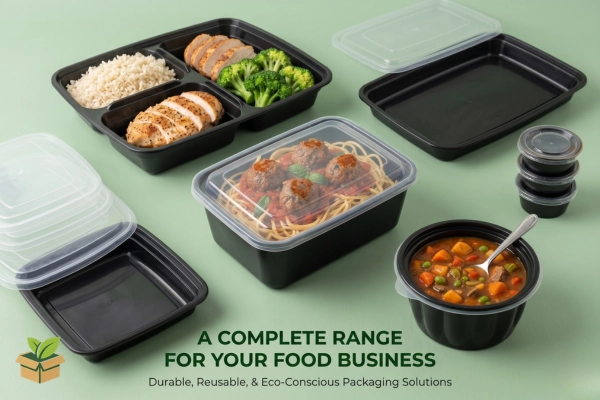
For a premium look, explore clear plastic food containers that work beautifully for ice cream and frozen dessert presentations.
Biodegradable & Eco-Friendly Ice Cream Cups
Best for: Eco-friendly brands, premium positioning, sustainability-focused markets
- Biodegradable ice cream cups are made from PLA (plant-based plastic) or compostable paper
- They decompose naturally, leaving no harmful residue
- Increasingly preferred by customers who care about environmental impact
- Slightly higher cost per unit, but the brand value they add is significant
If sustainability is part of your brand story, pairing eco-friendly cups with compostable biodegradable plates and wooden spoons creates a fully eco-conscious dessert experience that customers genuinely appreciate.
🏪 How to Choose the Right Ice Cream Cup for Your Business
Now that you understand sizes and materials, here’s a practical step-by-step framework for making the final decision.
Step 1: Define Your Menu and Portions
Start with your menu — not the cups.
- List every ice cream item you serve
- Define the standard scoop count for each item
- Assign the ideal cup size based on the ice cream cup size chart above
- Identify which sizes overlap to minimize the number of SKUs you stock
Most ice cream businesses can cover their full menu with just 3–4 cup sizes: a small (4–5 oz), a medium (8 oz), a large (12 oz), and a jumbo (16–32 oz) for specials.
Step 2: Consider Your Service Format
Dine-in parlor:
- Invest in quality paper or plastic cups with good presentation
- Consider clear plastic cups so customers can see the layers and toppings
- Use wooden spoons or eco-friendly wooden forks for a premium, sustainable touch
Takeaway / delivery:
- Use cups with secure lids to prevent spills
- Dome lids work great for topped desserts
- Consider disposable cup carriers when customers order multiple cups — it dramatically improves the takeaway experience
Cafe or restaurant dessert menu:
- Ice cream is likely a side item, so smaller cups (4–8 oz) are usually sufficient
- Presentation matters more here — choose cups that look elegant on a dessert plate
Events and catering:
- Stock larger cups (12–32 oz) for sharing portions
- Mini tasting cups (2–3 oz) are perfect for dessert stations and buffets
- Use kraft paper bags for packaging multiple cups for takeaway orders at events
Step 3: Think About Ice Cream Cup Capacity in ML
Pakistani and South Asian markets often use ml measurements alongside oz. Here’s a practical conversion to keep handy:
| Common Name | Oz | ML Equivalent |
|---|---|---|
| Small / Single Scoop | 4 oz | ~120 ml |
| Medium / Double Scoop | 8 oz | ~240 ml |
| Large / Triple Scoop | 12 oz | ~350 ml |
| Extra Large | 16 oz | ~475 ml |
When ordering from suppliers, always confirm whether they use oz or ml to avoid sizing mismatches.
Step 4: Match Cup Shape to Ice Cream Type
Not all ice cream cups are created equal in shape — and shape matters more than most people realize.
- Round cups — Classic, works for all ice cream types, easy to scoop into
- Tulip cups — Wider at the top, great for sundaes and toppings, visually appealing
- Flat-bottomed cups — More stable, better for heavy toppings, ideal for self-serve stations
- Cone-shaped paper cups — Traditional feel, great for soft serve and gelato
Step 5: Factor in Lids and Accessories
A cup without the right lid is an incomplete solution — especially for takeaway.
- Flat lids — Standard, works for most cup sizes, prevents spills
- Dome lids — Essential for whipped cream, tall toppings, and premium presentations
- Spoon slots — Some lids have built-in spoon slots for convenience
Always order lids when you order cups — and make sure they’re compatible sizes. Nothing is more frustrating than receiving cups and lids that don’t fit each other.
For spoons, birchwood wooden spoons are an excellent eco-friendly choice that customers genuinely appreciate over cheap plastic alternatives.
🌿 Going Eco-Friendly: What Modern Customers Expect
The shift toward sustainable packaging is no longer a trend — it’s a customer expectation. Here’s what you need to know about eco-friendly ice cream cups:
- Paper cups with water-based coatings are more eco-friendly than PE-coated versions
- PLA-lined cups are compostable and increasingly available
- Customers in urban markets actively choose businesses that use sustainable packaging
- Eco packaging doesn’t have to be expensive — it just needs to be intentional
Pair your eco-friendly cups with wooden spoons, paper straws, and compostable plates to create a fully sustainable dessert experience. Small changes like these build real customer loyalty over time.
❌ Common Ice Cream Cup Size Mistakes to Avoid
Even experienced parlor owners get this wrong. Here are the most common errors:
- Using one size for everything — A single universal cup compromises both small and large servings
- Buying cups without matching lids — Always confirm lid compatibility before ordering in bulk
- Ignoring cup shape — A narrow cup makes scooping difficult and looks awkward with toppings
- Oversizing portions — A large cup with a small scoop looks terrible and feels like poor value
- Choosing style over function — A beautiful cup that leaks or collapses is worse than a plain one that works
- Not accounting for toppings — Always leave 20–25% headroom in the cup for toppings and sauce
💡 Quick Reference: Best Ice Cream Cup Size by Use Case
Here’s your final cheat sheet — print it and keep it near your ordering station:
| Use Case | Recommended Size | Cup Type |
|---|---|---|
| Tasting / Sampling | 2–3 oz (60–90 ml) | Paper or plastic mini cup |
| Kids’ portion | 3–4 oz (90–120 ml) | Paper cup |
| Single scoop | 4–5 oz (120–150 ml) | Paper or plastic |
| Double scoop (standard) | 8 oz (240 ml) | Paper or plastic |
| Sundae / Triple scoop | 12 oz (350 ml) | Plastic tulip or paper |
| Loaded dessert | 16 oz (475 ml) | Plastic with dome lid |
| Sharing / Party | 32 oz (950 ml) | Large plastic or paper bowl |
| Gelato serving | 4–6 oz (120–180 ml) | Small paper cup |
| Frozen yogurt | 8–16 oz (240–475 ml) | Clear plastic (self-serve) |
| Soft serve | 6–12 oz (180–350 ml) | Paper cup or cone |
✅ Conclusion: The Right Cup Makes Every Scoop Better
Choosing the right ice cream cup size isn’t complicated — but it does require intentional thinking. The wrong cup can make even the best ice cream look and feel underwhelming. The right cup elevates the entire experience.
Here’s the simple formula to remember:
- Start with your menu — let your servings define your cup sizes
- Match size to scoop count — never leave a cup looking half-empty
- Choose the right material — paper for eco-friendliness, plastic for visibility
- Always pair with matching lids — especially for takeaway
- Go eco where you can — your customers will notice and appreciate it
- Think about accessories — the right spoon, straw, and carrier complete the experience
Whether you’re a small ice cream cart or a full-scale dessert parlor, the right ice cream cup selection is one of the easiest ways to instantly improve your customer experience and your bottom line.
Ready to stock up on the right ice cream cups for your business? Browse our complete range of disposable ice cream cups, eco-friendly wooden spoons, and plastic food containers — everything your ice cream business needs, all in one place.



















(0) Comments