

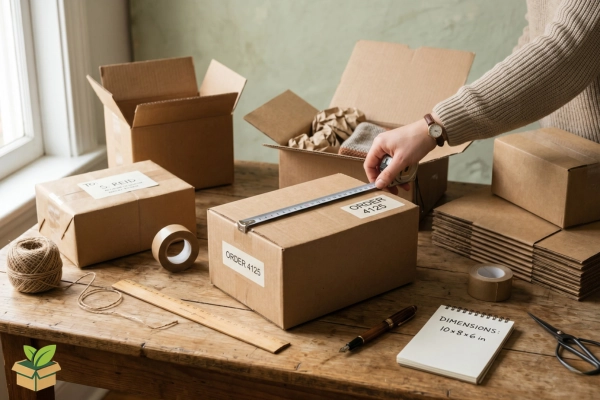
How to Choose the Right Box Size for E-Commerce Shipping (And Stop Losing Money on Packaging)
Every e-commerce seller has been there — you pack an order, ship it out, and then get hit with an unexpected oversized fee from your courier. Or worse, a customer receives a damaged product rattling around inside a box three times too big. Choosing the right box size for shipping isn’t just a packaging decision — it’s a business decision that directly impacts your costs, your customer experience, and your brand reputation.
This complete shipping box size guide will walk you through everything you need to know: from understanding shipping box dimensions and dimensional weight, to picking the best box size for every product type in your online store. Whether you’re just starting out or scaling up, this guide will help you ship smarter.
📦 Why the Right Box Size Actually Matters
Before we dive into the “how,” let’s talk about the “why.” Many new e-commerce sellers underestimate how much box size affects their bottom line. Here’s the reality:
💸 It Directly Affects Your Shipping Costs
Couriers like DHL, TCS, Leopards, and others don’t just charge based on actual weight anymore. They use dimensional weight shipping (also called DIM weight), which means a large, lightweight box can cost you just as much — or more — than a heavy one.
The formula is simple:
Dimensional Weight = (Length × Width × Height) ÷ DIM Factor
If your dimensional weight is higher than your actual weight, you pay for the dimensional weight. This is why shipping a small item in an oversized box is one of the most common and costly mistakes in e-commerce fulfillment packaging.
🛡️ It Protects Your Products
A box that’s too large allows products to shift and collide during transit. A box that’s too small puts pressure on the product and risks crushing. The correct box size for products creates just enough room for protective padding — nothing more, nothing less.
🌱 It Reflects Your Brand Values
Customers notice oversized packaging. In an era where sustainability matters, receiving a tiny item in a massive box feels wasteful. Right-sized packaging signals professionalism and environmental responsibility — both of which build long-term customer trust.
📐 Understanding Shipping Box Dimensions: The Basics
Before you can choose the right e-commerce shipping box size, you need to understand how boxes are measured and what those measurements mean.
How Box Dimensions Are Measured
Shipping boxes are always measured in this order: Length × Width × Height (L × W × H)
- Length = longest side of the box opening
- Width = shorter side of the box opening
- Height = depth of the box (how tall it stands)
For example, a standard e-commerce box 12×9×8 inch means 12 inches long, 9 inches wide, and 8 inches tall. Always measure your product first, then add space for padding.
The 2-Inch Rule for Padding
A reliable rule of thumb for most products:
Add 2 inches on each side of your product dimensions to allow space for bubble wrap, foam, or kraft paper padding.
So if your product measures 6×4×3 inches, you ideally want a box around 10×8×7 inches.
🔍 How to Choose the Right Box Size for E-Commerce — Step by Step
Here’s a practical, step-by-step process to nail your e-commerce packaging size every single time.
Step 1: Measure Your Product Accurately
Use a measuring tape or ruler and measure the product at its widest points — including any protruding parts, handles, or irregular shapes. Round up to the nearest half-inch.
For irregularly shaped items:
- Measure the bounding box (the smallest imaginary rectangle that fits around the entire product)
- Add padding allowance on all sides
Step 2: Decide on Your Protective Padding
The type of padding you use affects how much extra space you need inside the box:
| Padding Type | Space Needed Per Side | Best For |
|---|---|---|
| Bubble Wrap | 1–2 inches | Fragile, breakable items |
| Kraft Paper / Crumple Paper | 1–1.5 inches | General products, clothing |
| Foam Inserts | 0.5–1 inch | Electronics, precision items |
| Air Pillows | 1.5–2 inches | Lightweight, non-fragile items |
You can find quality bubble wrap rolls and shrink wrapping rolls to protect your products during transit.
Step 3: Calculate Your Ideal Box Size
Once you know your product dimensions and padding allowance, the math is straightforward:
Ideal Box Size = Product Dimension + (Padding × 2) for each side
Example:
- Product: 8×5×4 inches
- Padding: 1.5 inches per side
- Ideal Box: 11×8×7 inches
Round up to the nearest available standard size.
Step 4: Check Dimensional Weight vs. Actual Weight
Calculate the dimensional weight of your chosen box using your courier’s DIM factor. Compare it to your product’s actual weight. Always ship using the higher of the two — that’s what you’ll be charged.
If the dimensional weight is significantly higher than actual weight, consider:
- Switching to a smaller box
- Using a poly mailer instead (for soft goods)
- Choosing a custom box size for e-commerce that fits your product more precisely
Step 5: Test Before You Scale
Before ordering boxes in bulk, do a test run:
- Pack the product as you would for real shipping
- Drop the box from waist height (simulates handling)
- Shake it — nothing should rattle or shift
- Check that the box closes properly without bulging
📊 E-Commerce Shipping Box Size Guide: Quick Reference
Here’s a practical reference table for common product categories and their recommended box sizes:
| Product Type | Example Products | Recommended Box Size |
|---|---|---|
| Small accessories | Jewelry, phone cases, small cosmetics | 8×6×5 inch |
| Medium apparel | T-shirts, folded clothing, scarves | 12×9×8 inch or 12×11×7 inch |
| Books & stationery | Notebooks, planners, document sets | 15×10×10 inch |
| Home décor / kitchenware | Small appliances, décor items | 15×12×10 inch or 18×12×10 inch |
| Shoes | Single pair, boxed shoes | 15×12×13 inch |
| Large electronics | Tablets, small appliances | 19×12×14 inch or 22×14×18 inch |
| Bulk / multi-item orders | Subscription boxes, gift sets | 24×24×20 inch or 23×23×27 inch |
| Long/tall items | Rolled posters, garment bags | 17×10×22 inch or 31×14×24 inch |
Browse the full range of standard e-commerce boxes to find the exact size that fits your product.
⚖️ Small vs Large Shipping Box: Which One Should You Choose?
This is one of the most common dilemmas for online sellers. Here’s a clear breakdown:
When to Choose a Smaller Box
- Your product is compact and lightweight
- You want to reduce shipping costs by minimizing dimensional weight
- Your product doesn’t need much padding (e.g., clothing, soft goods)
- You’re shipping with a courier that charges heavily on DIM weight
When to Choose a Larger Box
- Your product is fragile and needs significant padding on all sides
- You’re shipping multiple items in one order
- Your product has an irregular shape that needs extra buffer space
- You’re including marketing inserts, thank-you cards, or tissue paper
The Golden Rule
Never use a box more than 2 inches larger than your product on any single side — unless you’re filling that space with protective material.
Empty space inside a box is your enemy. It increases dimensional weight and increases the risk of product damage.
🚚 Courier Box Size Requirements You Need to Know
Different couriers have different size limits and pricing structures. Here’s what to keep in mind for courier box size requirements in Pakistan:
- TCS / Leopards / Trax — Charge based on actual weight or dimensional weight, whichever is higher. Oversized packages may attract surcharges.
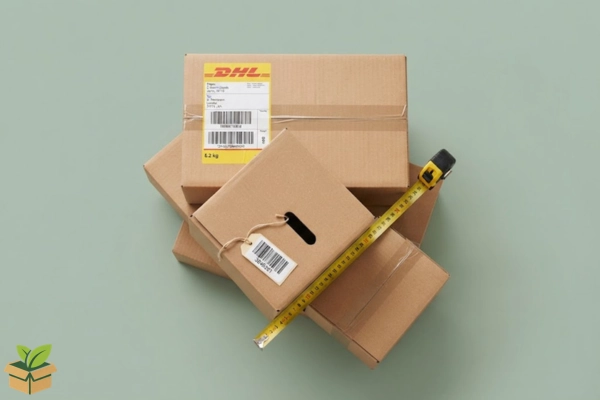
- DHL — Has strict size and weight limits for international shipments. For DHL-specific shipping, use purpose-built DHL shipping boxes that are designed to meet their dimensional standards. Options range from a compact DHL 10×5×5 inch box to a large DHL 36×22×20 inch box.
Always check your courier’s current size and weight guidelines before finalizing your packaging — these can change seasonally.
💡 Pro Packaging Tips for E-Commerce Sellers
Beyond just choosing the right box size, these packaging tips for e-commerce will help you reduce costs and improve customer satisfaction:
1. Standardize Your Box Sizes
Don’t use 15 different box sizes. Pick 3–5 standard sizes that cover 90% of your orders. This simplifies your packing process and lets you buy in bulk for better pricing.
2. Use Proper Sealing Tape
A well-chosen box means nothing if it’s poorly sealed. Use a strong 2-inch packaging tape or 3-inch packaging tape and apply the H-tape method on all seams.
3. Always Include Void Fill
Even in a correctly sized box, products can shift. Use bubble wrap or crumpled kraft paper to fill any remaining gaps.
4. Label Clearly
Place your shipping label on the largest flat surface of the box. Avoid placing labels over seams or tape — this can cause scanning issues at courier facilities.
5. Consider Custom Boxes for Premium Products
If you’re selling premium or branded products, custom box sizes for e-commerce create a memorable unboxing experience and reinforce your brand identity.
🔄 How Box Size Affects Your Overall E-Commerce Fulfillment Packaging Strategy
Choosing the right box isn’t a one-time decision — it’s part of a broader e-commerce fulfillment packaging strategy. Here’s how it connects to the bigger picture:
- Inventory management — Standardized box sizes make warehouse storage more efficient
- Cost forecasting — Predictable box sizes mean predictable shipping costs per order
- Returns processing — Right-sized boxes are easier for customers to repack for returns
- Sustainability — Smaller, right-sized boxes use less cardboard and generate less waste — a growing concern for eco-conscious consumers
If you’re also shipping food products, perishables, or specialty items, explore the eco food packaging and kraft food packaging options that combine the right size with food-safe materials.
❌ Common Box Size Mistakes to Avoid
Even experienced sellers make these errors. Here’s what to watch out for:
- Using the same box for everything — One size never fits all. A small item in a huge box wastes money and looks unprofessional.
- Ignoring dimensional weight — This is the #1 hidden cost in e-commerce shipping. Always calculate it before finalizing your box choice.
- Forgetting about oversize box shipping fees — Most couriers charge a surcharge for boxes beyond a certain size. Know your courier’s limits.
- Skimping on padding to use a smaller box — A damaged product costs far more than the savings from a smaller box.
- Not testing new box sizes — Always do a physical test pack before committing to a bulk order.
✅ Conclusion: Get Your Box Size Right From Day One
Choosing the right box size for e-commerce shipping is one of those decisions that seems small but has a massive ripple effect across your entire business. Get it right, and you’ll reduce shipping costs, protect your products, delight your customers, and build a more sustainable brand.
The formula is simple: measure your product accurately, add appropriate padding, calculate dimensional weight, and choose a box that fits snugly without excess space. Then standardize, test, and refine as your product catalog grows.
The good news? You don’t have to figure out the sizing alone. Explore the complete range of standard e-commerce boxes at Eco Packaging Pakistan — available in over 20 sizes to match every product type and shipping requirement. From a compact 8×6×5 inch box for small accessories to a large 36×22×20 inch box for bulk orders, the right size is already waiting for you.
Start shipping smarter today — your profit margins will thank you.
🙋 Frequently Asked Questions (FAQs)
Q1: What is the most common box size used for e-commerce shipping? The most commonly used sizes for general e-commerce are 8×6×5 inches (small items), 12×9×8 inches (medium items), and 15×12×10 inches (larger products). The best choice depends on your specific product dimensions.
Q2: How do I calculate dimensional weight for shipping? Multiply the length × width × height of your box (in cm or inches), then divide by your courier’s DIM factor. If the result is higher than your actual product weight, you’ll be charged the dimensional weight rate.
Q3: Should I use a box that’s slightly larger than my product? Yes — but only by 1–2 inches on each side to allow for protective padding. Avoid boxes more than 2 inches larger than your product on any side, as this wastes money and increases damage risk.
Q4: What’s the difference between standard e-commerce boxes and DHL shipping boxes? Standard e-commerce boxes are general-purpose corrugated boxes suitable for domestic couriers. DHL shipping boxes are purpose-built to meet DHL’s specific dimensional and structural requirements for international shipments.
Q5: How can I reduce shipping costs without compromising product safety? Choose the smallest box that still allows adequate padding, use lightweight void fill materials like air pillows or kraft paper, standardize your box sizes to buy in bulk, and always compare dimensional weight vs. actual weight before shipping.
Q6: Can I use the same box for fragile and non-fragile items? You can use the same box size, but fragile items require more internal padding (bubble wrap, foam inserts) which means you may need a slightly larger box to accommodate the extra protection layer.
Q7: Where can I buy e-commerce shipping boxes in Pakistan? Eco Packaging Pakistan offers a wide range of e-commerce boxes and DHL shipping boxes in multiple sizes, suitable for all types of online businesses across Pakistan.





















(0) Comments