

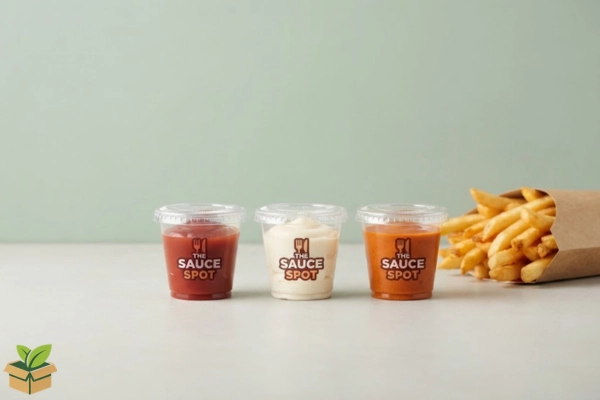
How to Brand Dip Sauce Cups: A Complete Guide to Custom Sauce Cup Packaging
If you have ever wondered how to brand dip sauce cups in a way that actually makes customers remember your restaurant, you are asking the right question at the right time. In Pakistan’s booming food delivery and dine-in culture, something as small as a sauce cup can quietly carry your logo into thousands of homes every single day. Most restaurant owners spend months perfecting their menu and interior design, yet they hand customers a plain, unbranded cup of ketchup or mayo dip without a second thought. That tiny oversight is actually a missed marketing opportunity, because every cup that leaves your kitchen is a mini billboard for your brand.
This guide walks you through everything you need to know to brand dip sauce cups the right way — from choosing materials and printing techniques to avoiding costly mistakes that small businesses often make. Whether you run a burger joint, a fried chicken outlet, or a bakery that serves dips alongside snacks, the principles here apply directly to your business.
🧠 Why Branding Your Dip Sauce Cups Actually Matters
It is easy to dismiss sauce cups as a “small detail,” but in reality, they sit at the intersection of customer experience and brand recognition. When a customer opens their delivery bag and sees a plain, generic cup, it feels like an afterthought. But when they see your logo neatly printed on a custom printed sauce cup, it signals that your business pays attention to detail — and that perception quietly builds trust.
There is also a practical marketing angle here. Unlike a receipt that gets thrown away immediately, a dip cup often sits on the dining table during the entire meal, visible to everyone sharing that table. If you are a food truck or a small restaurant trying to grow through word-of-mouth and social media shares, a well-branded cup increases the chances that your packaging ends up in a customer’s photo, tagged on Instagram with your handle visible. In many ways, this is one of the lowest-cost, highest-visibility branding tools available to a restaurant marketing strategy today, which is exactly why so many successful food brands treat it seriously.
If you want to understand just how impactful this single packaging item can be, our breakdown on why every restaurant needs dip sauce cups explains the functional and branding benefits in more depth.
🥤 What Exactly Are Dip Sauce Cups, and Why Do They Matter in Food Packaging
Before diving into the branding process, it helps to understand the product itself. Dip sauce cups are small, lidded or lid-less containers designed to hold condiments like ketchup, mayo, garlic sauce, or chutney alongside your main food item. They are a staple in food service packaging, used across fast food chains, cafes, bakeries, and catering businesses.
These cups typically come in plastic or biodegradable materials, with capacities ranging from a few grams to larger portion sizes depending on the sauce and serving style. Because they are small and often overlooked, many businesses buy generic, unbranded versions — which is precisely the gap that smart brands exploit. If you are curious about the available options, our disposable sauce dip containers and sauce containers with attached lids give you a practical sense of the formats you can customize.
🎨 Step-by-Step: How to Brand Dip Sauce Cups the Right Way
Branding a sauce cup is not just about slapping a logo on it. It requires thinking through materials, design, printing method, and color psychology together so the final product feels cohesive with the rest of your brand identity.
1. Start With the Right Base Material
Your branding efforts will only look as good as the surface they are printed on. Plastic cups offer a smooth, glossy finish that makes colors pop, which works well for bold, vibrant logos. On the other hand, eco-friendly dip cups made from biodegradable or paper-based materials have become increasingly popular among Pakistani consumers who are more conscious about sustainable packaging choices. If sustainability is part of your brand story, pairing it with the right eco-conscious container reinforces that message every time a customer picks it up.
2. Design a Logo That Works at a Small Scale
Many businesses make the mistake of using their full, detailed logo design on a surface that is barely a few centimeters wide. A sauce cup has limited real estate, so your logo design needs to be simplified into a version that remains legible even when printed small. Stick to clean lines, minimal text, and strong contrast between your logo and the background color of the cup. This is the same principle used successfully when brands print their logo on coffee cups — simplicity always wins at small scale.
3. Choose the Right Printing Technology
The printing method you choose directly affects cost, durability, and visual quality. Offset printing works well for large bulk orders and produces sharp, vibrant results, while digital printing is more cost-effective for smaller batches and allows for quicker turnaround. If your business frequently updates designs for seasonal promotions or limited-time offers, flexible custom print vendors who offer digital printing give you more agility without committing to huge minimum order quantities.
4. Pick Colors That Reflect Your Brand Personality
Color psychology plays a bigger role in consumer perception than most business owners realize. Red and yellow tend to stimulate appetite and urgency, which is why many fast-food brands lean into these tones. Green and earthy browns, meanwhile, communicate freshness and sustainability — ideal if your positioning leans toward organic or health-conscious food. Whatever palette you choose, make sure it matches the colors already used across your menu, signage, and primary packaging like your custom printed burger boxes, so customers experience one unified brand story rather than disconnected pieces.
🍔 Practical Examples: Brands Getting It Right
A few real-world patterns consistently show up among businesses that successfully brand their sauce cups. Fast food chains with strong food truck branding often use a single bold color with their logo centered on the lid, making it instantly recognizable even in a stack of other packaging. Bakeries that sell dips alongside fries or nuggets frequently use pastel-colored cups with handwritten-style fonts to match their softer, artisanal brand voice. Meanwhile, cloud kitchens that operate purely through delivery apps have started using custom condiment cups with QR codes printed directly on the lid, linking customers straight to their social media page or loyalty program.
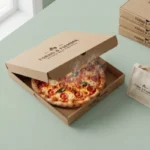
What ties all these examples together is intentionality. None of these businesses treated the sauce cup as an afterthought — each one was designed as a deliberate extension of the brand experience, similar to how thoughtful custom printing on pizza boxes has become a standard expectation rather than a luxury in Pakistan’s food industry.
🌱 Eco-Friendly Branding: Where Sustainability Meets Identity
Sustainability is no longer a niche concern in Pakistan’s food packaging landscape — it has become a genuine purchasing factor for a growing segment of customers. Branding your dip cups with eco-friendly materials does double duty: it reduces your environmental footprint while simultaneously telling customers a story about who you are as a business. A simple printed message like “proudly biodegradable” alongside your logo can shift customer perception from “just another sauce cup” to “a brand that cares.”
This approach aligns closely with the broader shift happening across the industry, something we cover extensively in our guide to eco-friendly food packaging options. If you are rethinking your entire packaging line rather than just sauce cups, our complete eco packaging guide is a useful next read.
📊 Branded vs Generic Sauce Cups: A Quick Comparison
To make the business case clearer, here is how branded sauce cup packaging stacks up against the plain, generic alternative most small businesses default to.
| Factor | Generic Sauce Cups | Branded Sauce Cups |
|---|---|---|
| Customer Recall | Low — forgettable, interchangeable | High — reinforces brand every use |
| Perceived Value | Feels cheap or careless | Feels premium and intentional |
| Marketing Value | None | Acts as passive advertising |
| Social Media Potential | Rarely photographed | Often shared organically |
| Cost Difference | Slightly cheaper upfront | Marginal increase, high ROI |
As the table shows, the cost gap between generic and branded options is usually small, while the long-term brand-building value is substantial — which is exactly why packaging affects food sales so directly in competitive markets like Pakistan’s food delivery scene.
🏭 Choosing the Right Packaging Supplier in Pakistan
Once your design is ready, the next critical step is finding a supplier who can execute it reliably and consistently. Not every packaging supplier offers the same print quality, material options, or minimum order flexibility, so it pays to compare a few before committing. Look specifically for vendors experienced in custom printed packaging solutions for the food industry, since food-grade compliance and print durability under moisture or heat are non-negotiable requirements for sauce containers.
Our detailed walkthrough on choosing the right packaging supplier covers the exact questions to ask before placing a bulk order, which is especially useful if this is your first time ordering bulk custom packaging for your business.
⚠️ Common Mistakes to Avoid When Branding Dip Cups
Even well-intentioned businesses stumble into a few predictable traps when they start customizing their packaging. Being aware of these upfront can save you both money and brand credibility:
- Overcomplicating the design — cramming too much text or detail onto a tiny surface makes the branding illegible rather than impressive.
- Ignoring material-print compatibility — some printing methods don’t adhere well to certain plastics or biodegradable surfaces, leading to smudged or faded logos.
- Ordering too small a batch — tiny print runs often come with disproportionately high per-unit costs, eating into your margins.
- Mismatching colors across packaging lines — inconsistent branding between your sauce cups, burger boxes, and bags confuses rather than reinforces brand identity.
These issues are part of a broader pattern we explore in our article on common packaging mistakes small businesses make, which is worth a read if you are building out your entire packaging strategy rather than just one item.
✅ Final Thoughts: Small Cup, Big Branding Opportunity
Learning how to brand dip sauce cups is really about recognizing that no touchpoint with your customer is too small to matter. A thoughtfully designed, well-printed sauce cup reinforces your identity, builds trust, and even earns free marketing through social shares — all from a packaging item that costs only slightly more than its generic counterpart. As Pakistan’s food industry becomes more competitive, these small branding decisions increasingly separate memorable businesses from forgettable ones.
If you are ready to turn this insight into action, explore our full range of custom dip sauce cups and condiment packaging solutions, and let our team help you design branding that actually sticks — literally and figuratively. Browse our shop to see the full catalog of customizable options available for your business today.
❓ Frequently Asked Questions
Q1: What is the minimum order quantity for custom printed dip sauce cups? Minimum order quantities vary by supplier and printing method, but digital printing generally allows smaller batches compared to offset printing, making it ideal for small businesses testing a new design.
Q2: Can I use biodegradable materials for branded sauce cups? Yes, biodegradable and eco-friendly materials are widely available and can be printed with your logo just like standard plastic cups, making them a popular choice for brands prioritizing sustainability.
Q3: How much does it typically cost to brand dip sauce cups compared to generic ones? The cost difference is usually marginal, especially at bulk order volumes, while the branding and marketing value gained significantly outweighs the small price increase.
Q4: Do branded sauce cups actually impact customer perception? Yes, studies on packaging and consumer behavior consistently show that branded, well-designed packaging increases perceived value and strengthens brand recall compared to generic alternatives.











(0) Comments