

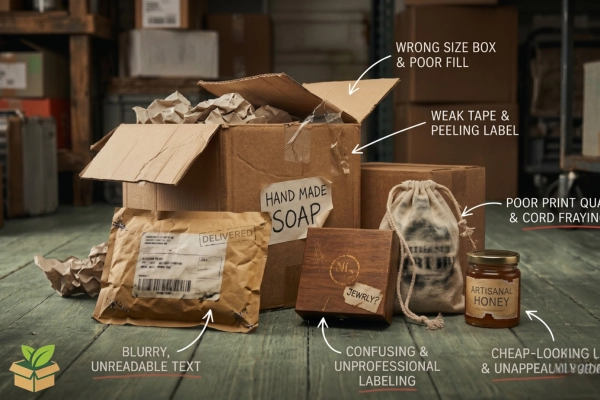
Top 10 Packaging Mistakes Small Businesses Make (And How to Fix Them)
You’ve built a great product. You’ve worked hard on your brand. But the moment your customer receives their order in a crushed box, a leaking pouch, or a plain brown bag with no identity — all that effort quietly disappears.
Packaging is not just a container. It’s your first physical handshake with the customer. And for small businesses, that handshake can either build loyalty or break trust instantly.
The good news? Most packaging mistakes small businesses make are completely avoidable. In this guide, we’re breaking down the top 10 product packaging mistakes — and more importantly, how to fix each one before they cost you customers, money, or your brand reputation.
🎯 Mistake #1: Treating Packaging as an Afterthought
This is the most common — and most damaging — of all small business packaging errors. Many startups focus entirely on the product and leave packaging decisions to the last minute. The result? Generic, mismatched, or completely forgettable packaging that communicates nothing about the brand.
Why it hurts:
- Customers form a first impression within seconds of receiving a package
- Poor packaging signals low quality — even if the product inside is excellent
- Missed opportunity to create a memorable unboxing experience
The fix: Plan your packaging alongside your product, not after it. Think about what emotion you want your customer to feel when they open the box.
💡 Whether you sell baked goods, dry foods, or handmade crafts — your packaging should tell your brand story from the outside in.
🎨 Mistake #2: Poor Packaging Design and Weak Branding
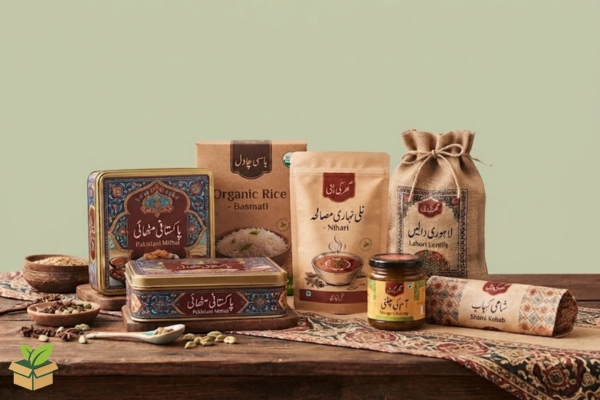
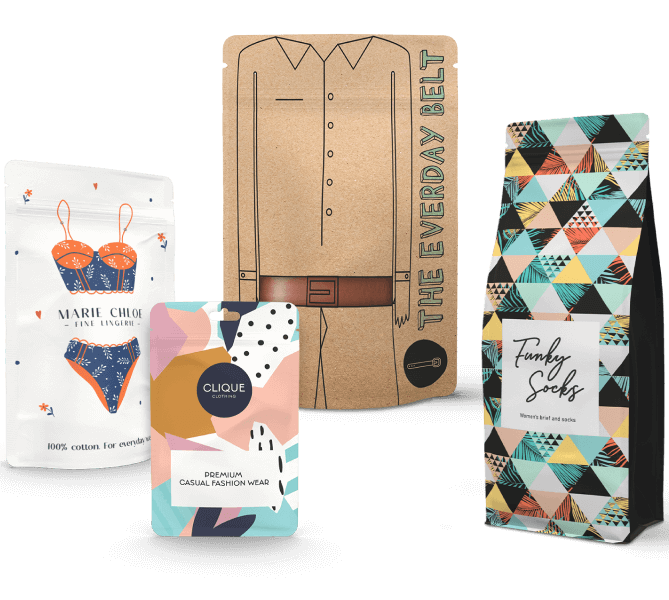
Walk into any store or scroll through any marketplace. The products that catch your eye aren’t necessarily the best — they’re the best packaged. Product packaging design mistakes are incredibly common among startups who either DIY their labels poorly or skip branding entirely.
Common branding mistakes in packaging include:
- Using generic fonts with no personality
- Inconsistent color palette across products
- No logo or brand name visible on the package
- Cluttered label design that confuses the customer
- Unprofessional product packaging that looks homemade (when it shouldn’t)
The fix: Invest in a clean, consistent label design. You don’t need a massive budget — but you do need intentionality. Use your brand colors, a readable font, and a clear product name.
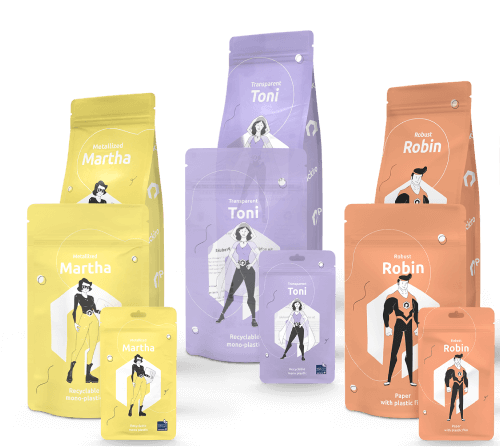
For food businesses, a brown kraft standup pouch with window or a white kraft standup pouch gives a premium, natural aesthetic that elevates even the simplest label design.
📏 Mistake #3: Choosing the Wrong Size Packaging
Too big, too small — both are problems. Using oversized boxes wastes money on materials and shipping. Using undersized packaging risks product damage. This is one of the most overlooked packaging mistakes to avoid, yet it directly impacts your bottom line.
What goes wrong with wrong-sized packaging:
- Products shift and break during transit
- Excess void fill adds cost and looks sloppy
- Oversized boxes increase dimensional weight charges
- Tight packaging can crush or deform products
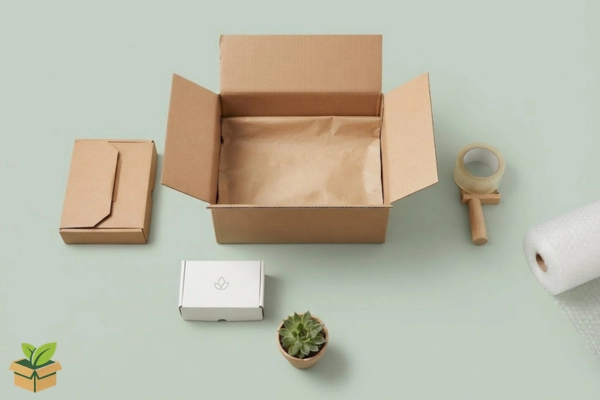
The fix: Match your packaging size precisely to your product. For e-commerce sellers, explore purpose-built options like standard e-commerce boxes in multiple sizes — from compact 8x6x5 inch to large 36x22x20 inch — so you always have the right fit.
For food delivery businesses, kraft bowls with lids come in sizes from 200ml to 1300ml, ensuring your portions are packaged perfectly every time.
💰 Mistake #4: Overspending (or Underspending) on Packaging
Getting the packaging budget wrong is a classic packaging cost mistake for small businesses. Some owners splurge on premium custom packaging before they have the sales volume to justify it. Others cut corners so aggressively that their packaging damages the product or the brand.
Signs you’re underspending:
- Products arrive damaged regularly
- Customers complain about packaging quality
- Your packaging looks noticeably cheaper than competitors
Signs you’re overspending:
- Packaging costs eat more than 10–15% of product cost
- You’re ordering custom packaging in quantities you can’t sell through
- ROI on packaging upgrades isn’t reflecting in sales or retention
The fix: Start with quality ready-made packaging that fits your brand aesthetic, then graduate to custom printing as volume grows. Options like black standup pouches or matte gold standup pouches look premium without requiring custom print minimums.
🚚 Mistake #5: Inadequate Protection for Shipping
This is where shipping packaging mistakes get expensive — literally. Fragile product packaging errors lead to broken items, customer complaints, refunds, and negative reviews. If your product arrives damaged even once, that customer is unlikely to return.
Common protection failures:
- No bubble wrap or void fill for fragile items
- Thin cardboard boxes that collapse under pressure
- Glass or ceramic items packed without inner cushioning
- Liquids packed without leak-proof sealing
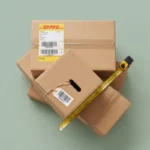
The fix: Use appropriate protective materials. For fragile or high-value items, bubble wrap rolls and packaging tape are non-negotiables. For shipping boxes, DHL-standard shipping boxes offer reliable structural integrity for courier deliveries.
For products requiring moisture or airtight protection, aluminum foil zipper pouches and retort pouches provide excellent barrier protection.
🏷️ Mistake #6: Missing or Incomplete Product Labels
This is both a customer experience failure and a legal risk. Packaging labeling mistakes are shockingly common among small food, cosmetic, and supplement businesses. Missing product information on packaging can lead to regulatory issues, customer confusion, and loss of trust.
What’s commonly missing:
- Ingredient or content list
- Net weight or volume
- Manufacturing or expiry date
- Business name and contact information
- Usage or storage instructions
- Allergen warnings (critical for food products)
The fix: Treat your label as a legal document and a marketing tool. Every package should clearly communicate what’s inside, who made it, and how to use or store it. Packaging compliance errors are avoidable — just build a label checklist before going to print.
🌱 Mistake #7: Ignoring Sustainability
Today’s customers — especially younger demographics — actively choose brands that align with their values. Using non-recyclable packaging when eco-friendly alternatives exist is not just an environmental mistake; it’s a business mistake. Sustainable packaging errors can quietly erode brand loyalty without you even realizing it.
What customers notice:
- Excessive plastic wrapping on simple products
- Non-recyclable materials with no eco messaging
- Styrofoam or single-use plastics that feel wasteful
The fix: Switching to sustainable packaging doesn’t have to be expensive. Consider:
- Kraft paper bags for retail and gifting
- Compostable biodegradable plates for food service
- Wooden cutlery instead of plastic
- Paper straws instead of plastic straws
- Kraft bowls for food delivery
Small eco-friendly swaps signal big brand values to your customers.
📦 Mistake #8: Neglecting the Unboxing Experience
The unboxing experience has become a genuine marketing channel. Customers share unboxing videos on social media, and a memorable unboxing can generate organic reach worth thousands in advertising. Unboxing experience mistakes leave this powerful opportunity completely untapped.
What a poor unboxing experience looks like:
- Plain brown box with no interior presentation
- No tissue paper, ribbon, or brand touch
- No thank-you card or insert
- Products rattling loosely inside
The fix: You don’t need to go overboard — small touches make a huge difference:
- Use a kraft multipurpose box with handle for gift-style presentation
- Add a custom printed napkin or tissue layer inside
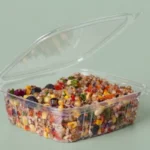
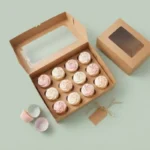
- For bakery businesses, clear lid display boxes create an instant “wow” moment when opened
- For chocolates and sweets, heart-shaped chocolate boxes or acrylic gift trays elevate the gifting experience dramatically
🔄 Mistake #9: Using One-Size-Fits-All Packaging Across All Products
Many small businesses try to simplify operations by using the same packaging for every product. While this seems efficient, it often results in poor fit, inconsistent brand presentation, and higher damage rates. This is a subtle but real startup packaging mistake.
The problem with uniform packaging:
- A delicate cupcake needs different packaging than a jar of sauce
- A dry spice pouch has different barrier requirements than a coffee bag
- A fragile cake needs a rigid box, not a flexible pouch
The fix: Build a small, curated packaging inventory tailored to your product range:
- Bakeries: Cupcake boxes, cake boxes, brownie boxes
- Food brands: Kraft standup pouches, spout pouches, retort pouches
- Restaurants: Pizza boxes, burger boxes, kraft bowls, coffee cups
- E-commerce: Standard shipping boxes in multiple sizes
⚡ Mistake #10: Not Testing Packaging Before Scaling
This is the final — and often most expensive — mistake. Many small businesses design packaging, order in bulk, and only discover problems after thousands of units are already packed. Whether it’s a seal that doesn’t hold, a box that collapses, or a label that peels — not testing packaging before scaling is a costly oversight.
What to test before bulk ordering:
- Drop test: Does the box survive a realistic fall?
- Seal test: Does the pouch stay sealed under pressure or heat?
- Label adhesion: Does the label stay on in humid or cold conditions?
- Customer feedback: Send samples to 5–10 real customers first
The fix: Always order a sample run before committing to large quantities. Most reputable packaging suppliers offer sample packs. Test in real shipping conditions, gather feedback, then scale with confidence.
💡 Quick Reference: Mistakes vs. Fixes
| Mistake | Core Problem | Quick Fix |
|---|---|---|
| Packaging as afterthought | No brand identity | Plan packaging with product launch |
| Poor design & branding | Looks unprofessional | Invest in consistent label design |
| Wrong size packaging | Damage + wasted cost | Match size to product precisely |
| Budget mismanagement | Over/underspending | Start with quality ready-made options |
| Inadequate shipping protection | Damaged products | Use bubble wrap + right box strength |
| Missing label information | Legal + trust issues | Build a label compliance checklist |
| Ignoring sustainability | Lost eco-conscious customers | Switch to kraft, paper, or biodegradable |
| Poor unboxing experience | Missed marketing opportunity | Add small brand touches inside |
| One-size-fits-all packaging | Poor fit + inconsistency | Build a curated packaging range |
| No testing before scaling | Expensive bulk mistakes | Always sample test first |
🏁 Conclusion: Your Packaging Is Your Brand’s First Voice
Every package you send out is a conversation with your customer — before they even open it. The packaging mistakes small businesses make are rarely about bad intentions; they’re about not knowing what to prioritize or where to start.
The businesses that grow fastest are the ones that treat packaging as a strategic investment, not an operational expense. Fix these 10 mistakes, and you’ll not only reduce costs and damage rates — you’ll build a brand that customers remember, trust, and recommend.
Start small. Start smart. And make every package count.
📣 Ready to Upgrade Your Packaging?
Browse Pakistan’s most complete range of eco-friendly, food-grade, and retail packaging solutions at EcoPackaging.pk. From kraft standup pouches and bakery boxes to e-commerce shipping boxes and sustainable food packaging — everything your small business needs is in one place.


















(0) Comments