
Eco-Friendly Egg Trays in Pakistan: Are They Really Available?
If you’ve been searching for eco-friendly egg trays in Pakistan, you’re not alone — poultry farmers, egg wholesalers, and small food businesses across the country are increasingly asking the same question. With plastic waste becoming a growing environmental concern, more buyers want packaging that protects eggs without hurting the planet. The good news? Yes, eco-friendly egg trays are available in Pakistan, and the options have expanded significantly over the past few years.
In this guide, we’ll walk through what makes an egg tray “eco-friendly,” which types are available locally, how they’re priced, and where you can actually buy them — whether you’re running a poultry farm, a grocery store, or an export business.
🥚 What Are Eco-Friendly Egg Trays?
Eco-friendly egg trays are packaging solutions made from renewable, biodegradable, or recycled materials instead of conventional plastic. Unlike plastic trays that can take hundreds of years to decompose, these alternatives break down naturally or can be recycled repeatedly without losing structural integrity.
How They Differ from Plastic Trays
- Material source: Made from recycled paper pulp, cardboard, or molded fiber instead of petroleum-based plastic
- Decomposition: Biodegradable and compostable within weeks to months
- Carbon footprint: Significantly lower manufacturing emissions
- Cost efficiency: Often comparable or even cheaper than plastic in bulk orders
- Cushioning: Molded pulp trays naturally absorb shock, reducing egg breakage during transport
This shift toward sustainable materials isn’t just a trend — it reflects a broader movement across eco-friendly packaging solutions in Pakistan that businesses are adopting to meet both consumer expectations and environmental responsibility.
🇵🇰 Are Eco-Friendly Egg Trays Available in Pakistan?
Yes — and the market has matured considerably. What used to be a niche request from a handful of environmentally conscious farms has now become mainstream demand.
The Growing Demand for Sustainable Packaging
Pakistan’s poultry industry produces millions of eggs daily, and traditional plastic trays have long dominated the supply chain. However, as awareness around plastic pollution grows, both local retailers and export-focused businesses are shifting toward sustainable egg packaging in Pakistan. This mirrors a larger pattern we’ve covered in our piece on how eco packaging is growing in Pakistan, where multiple industries — not just poultry — are embracing greener alternatives.
Local Manufacturers vs Imported Options
Pakistan now has a solid base of domestic egg tray manufacturers producing molded pulp and paper-based trays at scale. This local production has made eco friendly egg cartons in Pakistan more accessible and affordable compared to relying on imported alternatives, which often come with higher shipping costs and longer lead times.
🌿 Types of Eco-Friendly Egg Trays Available in Pakistan
Not all eco-friendly egg trays are the same. Here’s a breakdown of the main types you’ll find in the local market.
Molded Pulp Egg Trays
These are the most common molded pulp egg trays available in Pakistan. Made by compressing recycled paper pulp into shape, they offer excellent shock absorption and are fully compostable. Brands like AMS and Krystalite have built strong reputations in this space — if you’re comparing options, our detailed breakdown of AMS vs Krystalite egg trays is a great starting point.
Paper Egg Trays
Paper egg trays in Pakistan are lightweight, stackable, and ideal for retail display. They’re commonly used by grocery stores and supermarkets where presentation matters alongside protection.
Recycled Egg Trays
Made entirely from post-consumer recycled paper, recycled egg trays close the loop on waste — old cardboard and paper products are transformed into new packaging, reducing landfill contribution significantly.
✅ Benefits of Switching to Eco-Friendly Egg Packaging
Making the switch isn’t just good for the environment — it makes business sense too.
- Reduces plastic waste entering landfills and waterways
- Improves brand image among environmentally conscious customers
- Better shock absorption compared to rigid plastic trays
- Cost-competitive at bulk order volumes
- Compostable and biodegradable, supporting zero waste packaging goals
- Export-friendly, as many international markets now require sustainable packaging compliance
If you’re evaluating whether the switch makes financial sense for your business, our guide on how to switch to eco food packaging in Pakistan and save money breaks down the real cost comparisons.
🏭 How Are Egg Trays Made? The Manufacturing Process
Understanding the egg carton manufacturing process helps explain why these trays are both eco-friendly and durable.
- Pulping: Recycled paper and cardboard are mixed with water to form a pulp slurry
- Molding: The pulp is pressed into tray-shaped molds using vacuum forming
- Drying: Molded trays pass through heated drying chambers to remove moisture
- Trimming & Stacking: Excess material is trimmed, and trays are stacked for packaging
- Quality Check: Trays are inspected for strength, shape consistency, and cavity accuracy
This process uses significantly less energy and water compared to plastic injection molding, making it a genuinely environmentally friendly packaging choice from start to finish.
💰 Egg Tray Price in Pakistan: What to Expect
Pricing for eco-friendly egg trays varies based on tray size, cavity count, and order volume.
| Factor | Impact on Price |
|---|---|
| Cavity count (6, 12, 15, 30) | Higher cavity trays cost more per unit but offer better bulk value |
| Order quantity | Bulk orders significantly reduce per-piece cost |
| Material grade | Premium pulp density affects durability and price |
| Brand (AMS vs Krystalite) | Slight price variation based on finish and strength |
For specific sizing guidance, check out our comparison on egg tray sizes: 6, 12, 30 — which to choose. If you’d like current pricing, our egg tray category page lists updated rates across all available sizes.
🛒 Where to Buy Eco-Friendly Egg Trays in Pakistan
Finding a reliable source is often the biggest hurdle. Here’s where buyers typically look.
Egg Tray Suppliers and Manufacturers in Pakistan
Working directly with established egg tray manufacturers in Pakistan ensures consistent quality and better bulk pricing. Two of the most recognized names in the local market are:
- AMS Egg Trays — known for sturdy molded pulp construction, available in 6-egg and 12-egg configurations
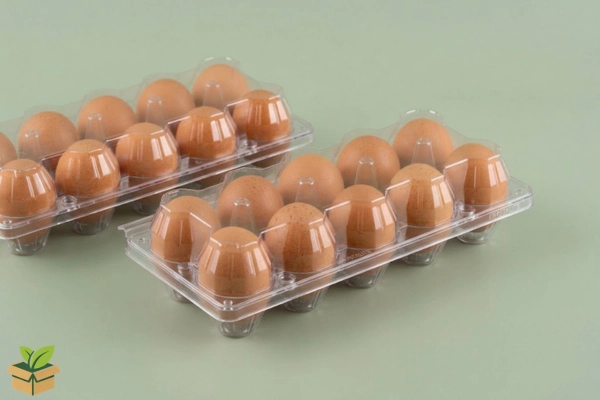
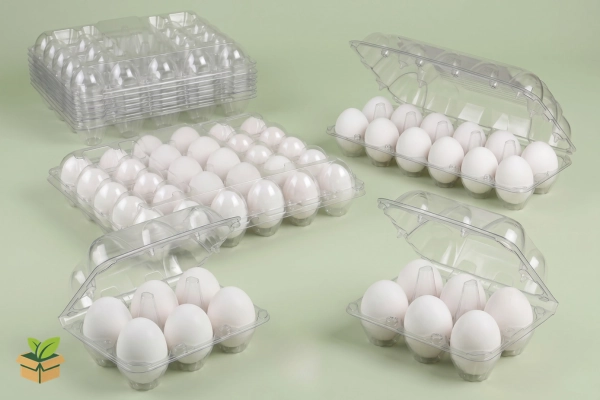
- Krystalite Transparent Egg Trays — a clear, display-friendly alternative available in 6-egg, 12-egg, 15-egg, and 30-egg sizes
If you’re specifically interested in the AMS brand, our dedicated article on AMS egg tray features and benefits covers everything from durability to farm suitability. Similarly, if transparency and display appeal matter for your business, read why Krystalite egg trays are popular in Pakistan.
Online Egg Tray Shopping
Egg tray online shopping in Pakistan has made bulk ordering far more convenient. You can browse the full Egg Tray product category directly on our shop page, compare sizes, and place orders without needing to visit a physical supplier.
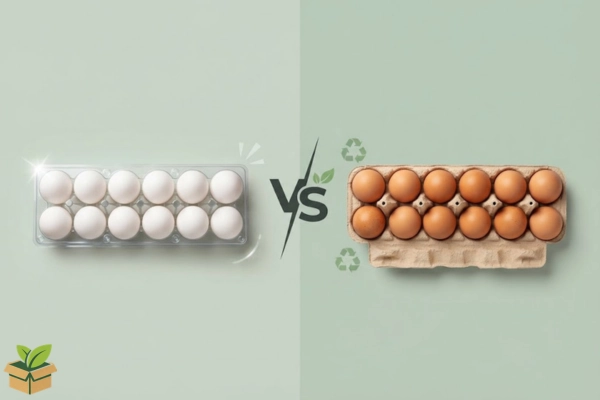
⚖️ Eco-Friendly vs Plastic Egg Trays: Which One Should You Choose?
This comes down to your priorities.
- Choose plastic if you need reusable, washable trays for internal farm-to-farm transport
- Choose eco-friendly options if you’re selling directly to consumers, exporting, or building a sustainability-focused brand
For poultry farms specifically weighing this decision, our guide on how to choose the right egg tray for your farm walks through practical considerations beyond just material type.
📈 Sustainable Packaging Trends in Pakistan 2026
The packaging industry in Pakistan is shifting rapidly. Some noticeable trends this year include:
- Increased demand for compostable egg packaging among urban retailers
- More eco packaging startups in Pakistan entering the molded pulp space
- Export businesses prioritizing plastic-free egg packaging to meet international buyer requirements
- Growing consumer preference for brands using zero waste packaging practices
For a broader view of where the industry is heading, our comprehensive resource on sustainable food packaging in Pakistan and our green food packaging options for food brands both offer valuable context.
🎯 Final Thoughts
Eco-friendly egg trays are no longer a hard-to-find niche product in Pakistan — they’re a readily available, cost-effective, and increasingly popular packaging solution. Whether you’re a poultry farmer looking to reduce your environmental footprint, a retailer wanting to attract eco-conscious customers, or an exporter needing compliant packaging, the local market now offers reliable options from trusted manufacturers like AMS and Krystalite.
The transition to sustainable packaging isn’t just good ethics — it’s good business. As demand grows and more suppliers enter the space, prices continue to become more competitive, making this switch easier than ever.
Ready to make the switch? Browse our full range of eco-friendly egg trays and place your bulk order today.
❓ Frequently Asked Questions
Q1: Are eco-friendly egg trays available in Pakistan? Yes, eco-friendly egg trays are widely available in Pakistan through local manufacturers like AMS and Krystalite, who produce molded pulp and recycled paper trays in multiple sizes.
Q2: Where can I buy eco-friendly egg trays in Pakistan? You can purchase them online through dedicated packaging suppliers or visit local egg tray manufacturers directly. Bulk buyers typically get better pricing through wholesale suppliers.
Q3: What is the price of egg trays in Pakistan? Prices vary based on cavity size (6, 12, 15, or 30 eggs) and order quantity. Bulk orders significantly reduce the per-unit cost.
Q4: What’s the difference between plastic and eco-friendly egg trays? Plastic trays are reusable but non-biodegradable, while eco-friendly trays made from molded pulp or recycled paper decompose naturally and offer better shock absorption.
Q5: How are eco-friendly egg trays made? They’re manufactured by mixing recycled paper into a pulp slurry, molding it into tray shapes, drying it, and trimming it into finished, ready-to-use packaging.















(0) Comments