

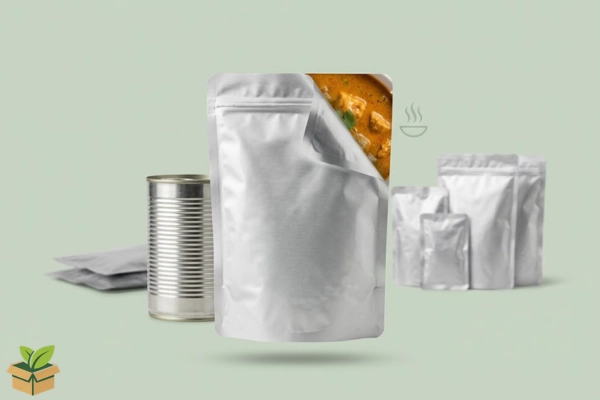
Retort Pouch: What It Is and When to Use It
If you’ve ever wondered how a soup or a ready-to-eat meal stays fresh for over a year without refrigeration, the answer usually lies inside a retort pouch. A retort pouch is a flexible, multilayer packaging solution built to withstand high-temperature sterilization, making it one of the most reliable ways to preserve food without cans, glass jars, or freezers. It’s lightweight, durable, and increasingly popular among food brands, meal-kit companies, and even pharmaceutical packers who need long shelf life without the bulk of traditional packaging.
In this guide, we’ll break down exactly what a retort pouch is, the materials that make it work, how it compares to canning, the different types available, and — most importantly — when your business should actually be using one. Whether you’re packaging ready-to-eat meals, sauces, pet food, or camping rations, understanding this format will help you make a smarter packaging decision.
📦 What Is a Retort Pouch?
A retort pouch is a flexible, food-grade pouch made from multiple laminated layers of film, designed to survive retort processing — a method of sterilizing sealed food packages using high heat and pressure, typically inside an autoclave. Think of it as the flexible cousin of the traditional tin can. Both preserve food by killing bacteria and microorganisms through heat, but the retort pouch does it in a slimmer, lighter, and often more shelf-appealing format.
The retort pouch meaning becomes clearer once you understand its purpose: it’s engineered to hold food safely at room temperature for extended periods, sometimes exceeding a year, without needing preservatives or refrigeration. This is why it’s become the packaging of choice for shelf-stable food products ranging from curries and soups to seafood and pet food.
What sets it apart from ordinary flexible packaging is its ability to handle extreme heat during sterilization without breaking down, leaking, or losing its barrier properties. That single capability opens the door to a huge range of practical uses, which we’ll explore shortly.
🧪 How Retort Pouch Packaging Works — Materials and Layers
The strength of retort pouch packaging comes from its construction. Unlike a single-layer plastic bag, a retort pouch is built from a multilayer laminate structure, where each layer plays a specific role in protecting the food inside.
A typical retort pouch material stack includes a PET (polyester) outer layer for strength and printability, a middle layer of aluminum foil for an airtight barrier against oxygen and light, and an inner polypropylene layer that’s heat-resistant and safe for direct food contact. This combination — often referred to as PET aluminum polypropylene layers — is what allows the pouch to survive the intense heat sterilization process without rupturing.
Because of this barrier packaging design, retort pouches block oxygen, moisture, and light almost completely, which is exactly what’s needed for long-term food preservation packaging. Some manufacturers also produce BPA-free packaging versions and fully transparent or metallized variants depending on the product’s shelf display needs.
At Eco Packaging, our retort pouch collection is built using this same multilayer laminate approach, ensuring pouches can handle thermal processing food requirements while staying durable enough for storage, shipping, and shelf display.
🥫 Retort Pouch vs Canning — Which One Wins?
This is one of the most common questions food brands ask, and honestly, the answer depends on your product and business goals. Both methods rely on sterilized food pouch or container technology, but the flexible pouch format brings a few clear advantages over metal cans.
Retort pouches heat up and cool down faster than cans during autoclave packaging, which actually helps retain more of the food’s flavor, color, and texture. They’re also significantly lighter, which reduces shipping costs, and they take up less storage space since they’re not rigid cylinders. From a consumer standpoint, pouches are easier to open, often microwaveable, and simply feel more modern on a retail shelf.
Here’s a side-by-side comparison to make the decision easier:
| Factor | Retort Pouch | Traditional Can |
|---|---|---|
| Weight | Lightweight, flexible | Heavier, rigid metal |
| Heating time in autoclave | Faster, gentler on food quality | Slower, can affect texture |
| Storage space | Compact, stackable | Bulky, cylindrical |
| Shelf appeal | Modern, printable, standup design | Traditional, limited branding space |
| Opening convenience | Easy tear or zipper opening | Requires can opener |
The takeaway: if you’re aiming for a shelf-stable food product that also looks premium and convenient, the retort pouch usually comes out ahead. Cans still have their place for certain heavy liquids or industrial use cases, but for most modern food brands, flexible packaging wins on both cost and consumer experience.
🧷 Types of Retort Pouches
Not every retort pouch looks or functions the same way. Depending on the product inside — liquid, semi-solid, or solid — manufacturers choose different pouch styles. Understanding the types of retort pouches available will help you pick the right one for your packaging line.
- 3-side seal retort pouches – flat pouches sealed on three edges, ideal for single-serve sauces, curries, and soups.
- Standup retort pouches – self-standing pouches with a bottom gusset, great for retail shelf display.
- Spout pouches – retort pouches fitted with a spout and cap, commonly used for liquid or semi-liquid foods like baby food or sauces.
- Zipper retort pouches – resealable pouches suited for products that need multiple servings, like pet food or snacks.
If you’re exploring options, our 3-sided seal retort pouch range comes in multiple sizes, including 250g and 1000g formats, giving flexibility depending on your product volume. For liquid-based products, our spout pouch category is worth exploring as well.
🍲 Retort Pouch Uses — Where It Really Shines
The retort pouch uses span a surprisingly wide range of industries, and once you see the pattern, it starts to make sense why it’s grown so popular. Any product that needs long shelf life, portability, and heat-resistant packaging tends to be a strong candidate.
Ready-to-eat meals (MRE) are perhaps the most well-known application, especially in military ration packaging, where soldiers need lightweight, shelf-stable food that survives extreme conditions without refrigeration. Beyond military use, the same logic applies to camping food packaging and outdoor adventure meals, where weight and durability matter just as much as taste.
The pet food pouch segment has also grown rapidly, with premium pet food brands shifting from cans to retort pouches for the same reasons human food brands do: better shelf appeal, lighter shipping weight, and improved product freshness. Soup and sauce pouch packaging is another major category, especially for brands offering single-serve or family-pack meal solutions that need to sit on a shelf for months without spoiling.
Even the pharmaceutical and medical field occasionally uses retort-style pouches for sterilized packaging where heat sterilization is part of the safety protocol. In short, wherever you see the combination of “needs to last long” plus “needs to be lightweight,” there’s a good chance a retort pouch fits the job.
🎯 When Should You Actually Use a Retort Pouch?
Here’s where it gets practical. Not every food product benefits from retort pouch packaging, so it helps to know the signs that point toward “yes, this is the right format for us.”
If your product needs a shelf life extension beyond a few weeks without relying on refrigeration, that’s usually the first signal. Products like curries, gravies, ready meals, and sauces that traditionally required canning or frozen storage are excellent candidates, since the pouch delivers the same food safety packaging benefits with far less bulk.
Another strong indicator is branding and shelf differentiation. If you’re competing in a crowded retail category — say, ready meals or pet food — a standup retort pouch with a printed matte or glossy finish instantly looks more premium than a can sitting on the same shelf. Since our standup pouch collection already supports a wide range of printed finishes, brands can achieve that shelf-stopping look while still getting full retort-grade protection.
Shipping cost is the third factor worth considering. Because retort pouches weigh significantly less than glass or metal alternatives, businesses shipping products across cities or exporting internationally often see real savings simply by switching formats. If you’re already exploring lighter packaging materials for cost efficiency, it’s worth reading our guide on what a kraft standup pouch is and its benefits, which covers similar weight-saving logic for dry goods.
Lastly, if your product needs to survive rough handling during delivery — think camping food, export shipments, or bulk food service — the retort pouch’s puncture resistance and sealed barrier make it a dependable canning alternative that doesn’t compromise on protection.
🌍 Why Businesses in Pakistan Are Switching to Retort Pouches
Across Pakistan’s growing food and beverage sector, more brands are moving away from traditional canning toward flexible, sustainable packaging formats — and retort pouches are leading that shift. Lower shipping weight, reduced material usage, and better shelf presentation all align with the broader move toward eco-conscious packaging that we’ve covered in our piece on how eco packaging is growing in Pakistan.
This shift isn’t just about looks. Retort pouches genuinely support sustainability goals since they use significantly less raw material than metal cans or glass jars, while still delivering the same food-grade laminate protection. For brands serious about long-term packaging strategy, our guide on sustainable food packaging in Pakistan dives deeper into why this transition matters beyond just cost savings.
At Eco Packaging, we manufacture retort pouches designed specifically for the local food industry’s needs — from small-batch sauce makers to large-scale ready-meal producers. If you’re also exploring related flexible formats, our foil standup pouch options and brown kraft standup pouch guide offer useful comparisons for dry and semi-dry product lines.
✅ Final Thoughts
A retort pouch isn’t just another packaging trend — it’s a genuinely practical solution for any food brand trying to balance shelf life, cost, and presentation. From ready-to-eat meals and pet food to camping rations and sauces, this format solves a real problem: how do you keep food safe and fresh for months without relying on heavy, expensive containers?
If your product needs long shelf life, lightweight shipping, and a shelf presence that stands out, it’s time to seriously consider making the switch. Explore our full retort pouch collection or browse our complete shop to find the right size and format for your product line, and let your packaging do more than just hold food — let it sell it.
❓ Frequently Asked Questions
What is a retort pouch used for? A retort pouch is used to package shelf-stable foods like ready-to-eat meals, soups, sauces, and pet food, allowing them to stay fresh at room temperature for extended periods without refrigeration.
How is a retort pouch different from regular plastic packaging? Unlike regular plastic bags, a retort pouch is built with multiple laminated layers, usually including PET, aluminum foil, and polypropylene, allowing it to survive high-temperature sterilization without breaking down.
Is a retort pouch better than a can? In most cases, yes. Retort pouches are lighter, heat and cool faster during sterilization (preserving food quality better), take up less storage space, and offer more branding flexibility than traditional cans.
Can retort pouches be used for pet food? Absolutely. Pet food brands increasingly use retort pouches because they extend shelf life, reduce packaging weight, and offer a more premium shelf appearance compared to canned pet food.
Are retort pouches microwave-safe? Many retort pouches are designed to be microwave-safe, though it depends on the specific material and product design. Always check the packaging specifications before microwaving.

















(0) Comments