
🥚 Plastic vs Paper Egg Tray: Which One Is Really Better for Your Business?
Choosing between a plastic vs paper egg tray feels like a small decision until you realize how much it actually affects your costs, your product’s shelf life, and even how customers perceive your brand. Whether you run a poultry farm, a wholesale egg business, or a retail store in Pakistan, the tray you pick directly influences breakage rates, storage efficiency, and your environmental footprint. This isn’t just packaging — it’s a daily operational choice that either saves you money or quietly drains it.
In this guide, we’ll break down both materials in detail, compare them side by side, and help you decide which egg tray is better suited to your specific business needs. By the end, you’ll have a clear, practical answer instead of a confusing mix of opinions.
🧐 Why the Egg Tray Material You Choose Actually Matters
Most business owners assume an egg tray is just a tray — as long as it holds eggs, the job is done. In reality, the material determines how well your eggs survive transport, how your storage space is used, and how much waste your business generates every month. A poor choice can mean higher breakage rates, unhappy customers, and recurring costs that add up fast.
This is exactly why the egg tray comparison between plastic and paper has become such a common question for farms, distributors, and retailers alike. Both materials have loyal users, and both come with trade-offs that only become obvious once you look past the surface. Understanding the egg tray pros and cons of each option gives you the confidence to choose based on facts rather than habit.
🧪 What Exactly Is a Plastic Egg Tray?
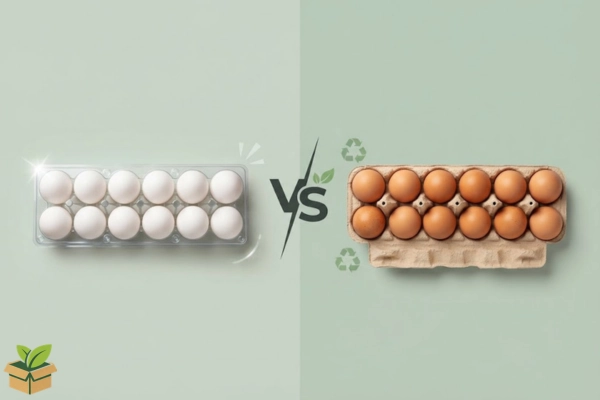
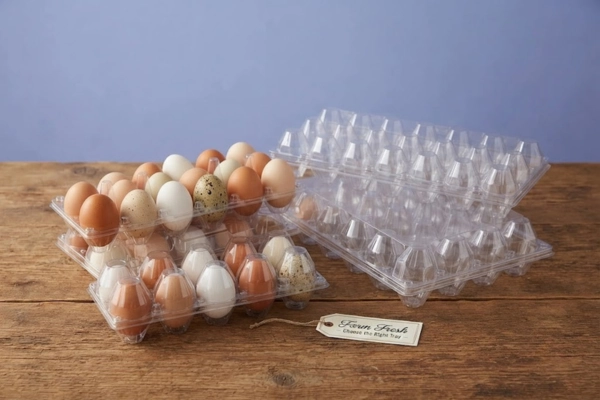
A plastic egg tray is typically made from PET, PVC, or other food-grade plastics, often molded into a rigid, transparent, or colored structure with individual pockets for each egg. These trays are popular in supermarkets and premium retail settings because they’re reusable, visually clean, and sturdy enough to survive repeated handling without losing shape.
In Pakistan, two names dominate this category — AMS and Krystalite trays — each offering slightly different strengths depending on your business type. If you’re unsure which one suits your operation, our detailed breakdown of egg tray types in Pakistan comparing AMS vs Krystalite walks through the exact differences in build quality, pricing, and use cases. Plastic trays also tend to be washable, which makes them a favorite for businesses that reuse packaging across multiple delivery cycles rather than disposing of it after a single use.
🍃 What Exactly Is a Paper (Pulp) Egg Tray?
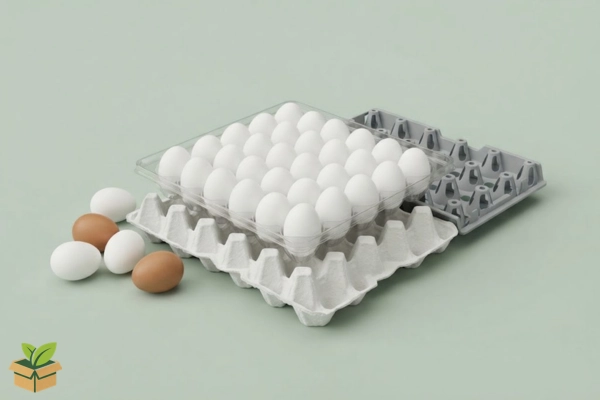
A paper egg tray — also called a molded pulp egg tray — is manufactured from recycled paper or cardboard pulp, pressed into shape using heat and moisture. It’s the tray you’ll most commonly see at local poultry farms, open markets, and eco-conscious retailers. Unlike plastic, it’s fully biodegradable and compostable, which has made it increasingly popular as environmental regulations tighten and consumer awareness grows.
Paper trays absorb shock well because the pulp material naturally cushions impact, and their slightly rough texture actually helps grip eggs in place during transport. If sustainability is a priority for your brand, it’s worth exploring our complete guide on eco-friendly egg trays in Pakistan, which covers sourcing, pricing, and where these trays are already making an impact across the local market.
⚖️ Plastic vs Paper Egg Tray: Head-to-Head Comparison
Numbers and direct comparisons often make a decision easier than long explanations. Here’s how the two materials stack up across the factors that matter most to buyers and sellers alike.
| Factor | Plastic Egg Tray | Paper Egg Tray |
|---|---|---|
| Durability | Highly durable, reusable for years | Moderate, best for single or limited use |
| Cost | Higher upfront cost | Lower upfront cost |
| Hygiene | Easy to wash and disinfect | Harder to clean, usually single-use |
| Biodegradability | Not biodegradable | Fully biodegradable and compostable |
| Moisture Resistance | Excellent | Weak, absorbs moisture easily |
| Visual Appeal | Clear, premium look for retail | Natural, eco-friendly appearance |
| Stacking Strength | Very strong, stacks well | Moderate, can crush under heavy loads |
This table makes one thing clear — there’s no universal winner. The right choice depends entirely on whether your priority is long-term reusability or short-term sustainability.
✅ Advantages of Plastic Egg Trays
The biggest advantage of plastic egg trays lies in their longevity. Because they’re washable and don’t degrade with repeated use, businesses that handle high volumes — like wholesale egg suppliers — find them far more cost-effective over a year compared to constantly repurchasing disposable trays. Their rigid structure also protects eggs better during rough transport, significantly reducing breakage on bumpy delivery routes common across Pakistan.
Plastic trays additionally offer a cleaner, more premium shelf presence, which matters if you’re selling in supermarkets where visual appeal influences buying decisions. Many retailers prefer the transparent AMS or Krystalite styles specifically because customers can see the eggs clearly before purchase, building trust at the point of sale.
⚠️ Disadvantages of Plastic Egg Trays
Despite their strengths, plastic egg trays carry a real environmental cost. They don’t biodegrade, and if mismanaged, they contribute directly to plastic pollution — a growing concern as more consumers and regulators push for sustainable packaging alternatives. The higher upfront price also makes them less accessible for smaller farms or vendors operating on tighter margins.
There’s also a practical downside: plastic trays require regular cleaning to stay hygienic, which adds labor time that paper trays simply don’t demand since they’re typically discarded after one cycle.
🌿 Advantages of Paper Egg Trays
Paper egg trays shine where plastic struggles — sustainability. Since they’re made from recycled pulp, they decompose naturally and don’t linger in landfills for decades. This makes them an easy choice for businesses trying to align with eco-friendly packaging standards or appeal to environmentally conscious customers who actively look for sustainable packaging options.
Cost is another strong point. Paper trays are generally cheaper to produce and purchase in bulk, which matters significantly for small-scale poultry farms and local vendors working with tighter budgets. Their lightweight nature also reduces shipping costs when trays are transported in large quantities.
⚠️ Disadvantages of Paper Egg Trays
The main limitation of paper trays is moisture sensitivity. In humid storage conditions or during rainy transport, pulp trays can soften, weaken, and in worst cases, collapse under the weight of stacked eggs. They’re also generally designed for single-use, meaning repeated restocking costs can add up over time, especially for high-volume operations.
Visually, paper trays lack the clean, polished look that retail environments sometimes demand, which can be a drawback for premium egg brands trying to stand out on store shelves.
💰 Cost Comparison: Which One Saves You More?
When business owners ask which egg tray is better, cost is usually the deciding factor. On the surface, paper trays appear cheaper — and for one-time or low-volume use, they genuinely are. However, plastic trays often become more economical over time because they’re reused dozens or even hundreds of times before replacement is needed.
Here’s a simplified look at how the economics typically play out:
| Use Case | Better Choice | Why |
|---|---|---|
| High-volume wholesale supply | Plastic tray | Reusability reduces long-term cost |
| Small farm or local vendor | Paper tray | Lower upfront investment |
| Premium retail display | Plastic tray | Better visual presentation |
| One-time bulk delivery | Paper tray | No need for return or reuse logistics |
The real egg tray cost comparison, then, depends less on the price tag and more on how many cycles you expect to get out of each tray before replacement.
🌍 Environmental Impact & Sustainability
Sustainability conversations around packaging have intensified across Pakistan, and egg trays are very much part of that shift. Paper trays clearly win here — their biodegradability means a far smaller carbon footprint and no long-term landfill burden. For businesses actively trying to position themselves as environmentally responsible, switching to pulp-based packaging is often a meaningful step, and you can explore how other brands are making this shift in our guide on how eco-friendly packaging is growing across Pakistan.
That said, plastic isn’t entirely without merit in this conversation. Reusable plastic trays, when properly managed and not discarded after single use, can actually reduce overall waste generation compared to repeatedly manufacturing and disposing of paper alternatives. If you’re trying to understand the broader distinction between biodegradable and compostable materials before making a packaging decision, our breakdown of biodegradable vs compostable packaging is a useful next read.
🏭 Which Egg Tray Is Better for Your Business?
There’s no single correct answer here — the better material depends entirely on your business model, order volume, and customer expectations. A large-scale egg distributor handling thousands of units daily will likely find plastic trays far more economical over a year, since the reusability offsets the higher initial cost within just a few cycles. On the other hand, a small poultry farm selling locally or a vendor focused on sustainability messaging will probably find paper trays align better with both their budget and their brand values.
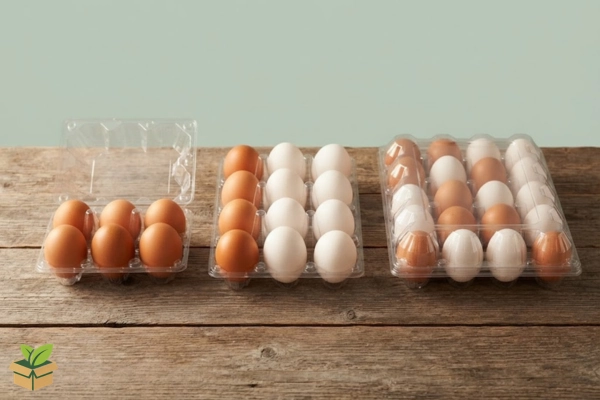
If you’re still unsure which option fits your specific setup, our detailed resource on choosing the right egg tray for your farm walks through practical decision-making based on order size, storage conditions, and delivery distance. It’s also worth checking our egg tray sizes guide covering 6, 12, and 30-count options since size requirements often influence which material performs better in practice.
Businesses already using AMS trays for their durability can explore the AMS 12 egg tray for mid-volume needs, while retailers wanting a premium transparent look often prefer the Krystalite transparent 30 egg tray for bulk display purposes. For a broader look at our full range, you can browse the complete egg tray product category to compare specifications side by side.
It’s also worth noting that this plastic-versus-paper debate isn’t unique to egg trays. If you’re reassessing packaging materials across your entire product line, our comparison on plastic vs paper containers and our guide on kraft bowl vs plastic bowl offer similar decision frameworks that may apply to other parts of your business too.
❓ Frequently Asked Questions
Which egg tray is better, plastic or paper? It depends on your use case. Plastic is better for high-volume, long-term reuse, while paper is better for sustainability-focused, lower-budget operations.
Are paper egg trays biodegradable? Yes, paper egg trays are made from recycled pulp and are fully biodegradable and compostable, making them an environmentally friendly packaging option.
Can plastic egg trays be reused multiple times? Yes, plastic egg trays are designed for repeated use and can be washed and reused for years with proper care, making them cost-effective over time.
Which egg tray is cheaper to buy initially? Paper egg trays typically have a lower upfront cost compared to plastic trays, though plastic becomes more economical over multiple reuse cycles.
Do paper egg trays protect eggs as well as plastic trays? Paper trays offer good shock absorption but are weaker under moisture or heavy stacking, while plastic trays provide more consistent protection during transport.
Which egg tray is more hygienic for food safety? Plastic trays are easier to wash and disinfect, making them generally more hygienic for repeated use, while paper trays are best suited for single-use applications.
🎯 Final Verdict
The plastic vs paper egg tray debate doesn’t have a one-size-fits-all winner — it comes down to matching the material to your business priorities. If durability, reusability, and long-term cost savings matter most, plastic trays are the stronger investment. If sustainability, lower upfront costs, and eco-conscious branding matter more to your customers, paper trays are the smarter fit.
Whichever direction suits your operation, making an informed choice now will save you money, reduce waste, and improve how your product is perceived by buyers. Explore our full range of plastic and paper egg trays and find the exact size, material, and style that matches your business needs today.


















(0) Comments