

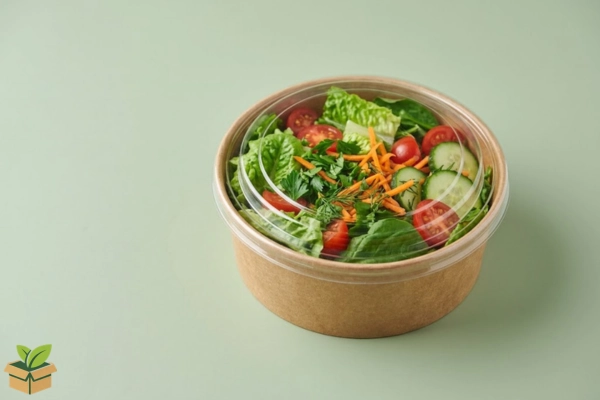
Kraft Bowl for Salad Packaging: A Complete Guide to Fresher, Greener Takeaways
If you run a restaurant, cloud kitchen, or catering business anywhere in Pakistan, chances are you’ve already heard your customers ask about packaging that feels fresher, looks cleaner, and doesn’t harm the environment. That’s exactly where the kraft bowl for salad packaging comes in. It has quietly become one of the most requested solutions among food brands that are moving away from plastic and embracing something more sustainable, more presentable, and genuinely better suited to how people eat salads today. This guide walks you through everything — what kraft bowls are, why they work so well for salads, how to choose the right size, and how your brand can use them to stand out in a crowded food market.
🥗 What Exactly Is a Kraft Bowl for Salad Packaging?
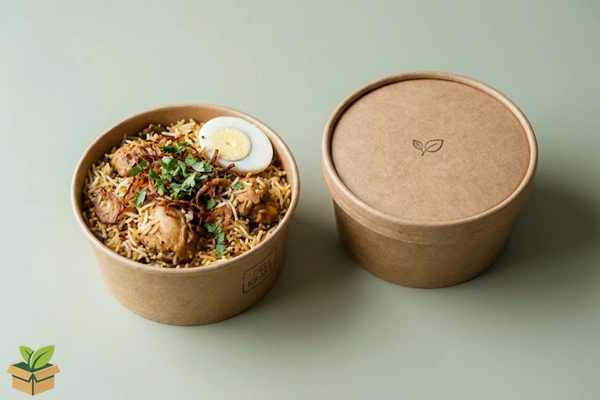
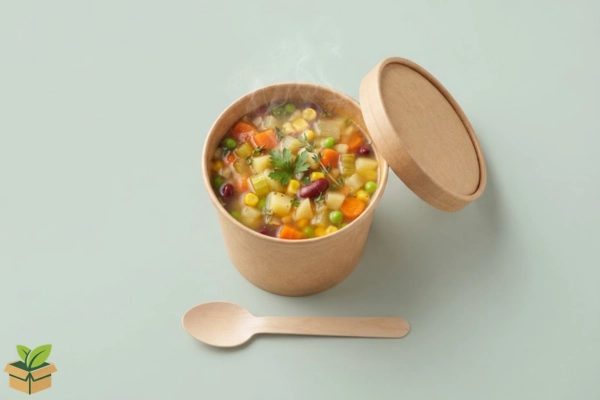
A kraft salad bowl is a food-grade paper container made from kraft paperboard, often lined with a thin coating to resist moisture and grease. Unlike flimsy paper plates or basic takeaway boxes, these bowls are engineered specifically to hold wet, oily, or dressing-heavy foods without turning soggy within minutes. The natural brown kraft tone gives it an earthy, premium look that instantly communicates “fresh” and “clean” to the customer before they even open the lid.
What makes this packaging particularly interesting for salad businesses is the combination of structure and sustainability. The bowl holds its shape under pressure, stacks neatly for storage, and still breaks down naturally once discarded — something a plastic container simply cannot offer. If you’ve ever compared the two side by side, you’ll find a detailed breakdown in our article on kraft bowls vs plastic bowls, which explains exactly where each material performs better.
🌍 Why Eco-Friendly Salad Bowls Are Winning Over Pakistani Food Businesses
Pakistan’s food industry has shifted noticeably over the past few years, and a lot of that shift comes down to customer expectations. People ordering salads, grain bowls, or fresh meal-prep boxes are often the same people who care about sustainability — so handing them a plastic container sends the wrong message, even if the food itself is excellent.
Eco-friendly salad bowls solve this disconnect. They’re biodegradable, often compostable depending on the lining used, and they align perfectly with the broader move toward plastic-free packaging that restaurants, cafes, and cloud kitchens are adopting nationwide. If you want to understand this shift at a deeper level, our guide on why sustainable food packaging matters in Pakistan covers the environmental and business reasoning in detail.
There’s also a quieter advantage here: perception. A kraft bowl simply looks more intentional. It tells the customer that your brand thought about freshness, hygiene, and the planet — all in one unboxing moment.
🧾 What Makes Kraft Paper Salad Bowls Different From Ordinary Containers
Not every paper bowl is built the same way, and this is where a lot of buyers get confused. A genuinely well-made kraft paper salad bowl has a few defining characteristics that separate it from cheap, low-grade alternatives.
- Grease and moisture resistance — a proper food-grade lining prevents oily dressings from soaking through the base
- Leak-proof construction — reinforced seams and a sturdy rim keep liquids contained during transport
- Lid compatibility — most kraft bowls are designed to pair with secure-fit lids for delivery and takeaway orders
- Stackability — a flat, uniform base allows bowls to stack cleanly in storage or during packing
These features matter more than they might seem at first glance. A bowl that leaks or collapses mid-delivery doesn’t just ruin a salad — it damages trust. This is one of the reasons kraft bowls have become so popular for food delivery specifically; we’ve written a more detailed breakdown in how kraft bowls keep food fresh during delivery if you want to see exactly how the construction holds up under real delivery conditions.
📏 Kraft Salad Bowl Sizes: Finding the Right Fit for Your Menu
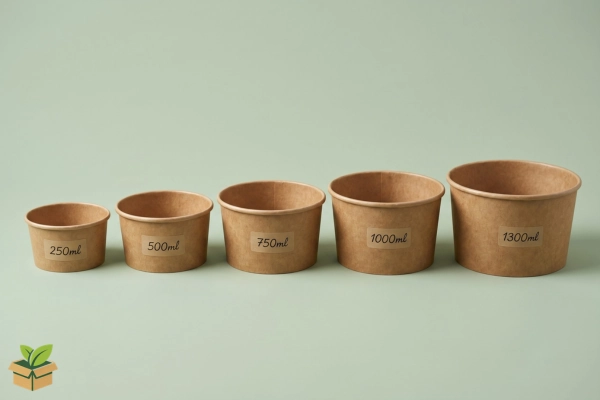
One of the most practical questions business owners ask is simply: what size do I need? The answer depends on your menu — a side salad needs far less room than a full meal-sized grain bowl. Fortunately, kraft bowls come in a wide range of sizes, which makes it easy to match packaging to portion without overspending on oversized containers.
Here’s a quick snapshot of commonly used sizes and what they typically suit:
| Size | Best Suited For |
|---|---|
| 200ml – 250ml | Side salads, dips, small portions |
| 350ml – 480ml | Single-serve salads, light meals |
| 500ml – 750ml | Full meal salads, grain bowls |
| 1000ml – 1300ml | Family-size or sharing portions |
If you’d like the full breakdown with use-case recommendations for each size, our dedicated post on kraft bowl sizes from 250ml to 1300ml goes into much greater depth. You can also browse the exact products directly — for instance the 250ml kraft bowl with lid, the 500ml round kraft bowl, the 750ml round kraft bowl, and the 1000ml round kraft bowl are all commonly stocked for salad and meal-prep use.
⚖️ Kraft Bowls vs Plastic Bowls: Which One Actually Wins
This comparison comes up constantly, and understandably so — plastic has been the default for decades, so switching feels like a risk. But when you line up the two side by side, the differences become clear fairly quickly.
| Factor | Kraft Salad Bowl | Plastic Bowl |
|---|---|---|
| Environmental impact | Biodegradable, often compostable | Takes decades to break down |
| Visual appeal | Natural, premium look | Generic, less distinctive |
| Heat/grease resistance | Good with proper lining | Excellent, but non-biodegradable |
| Customer perception | Seen as eco-conscious | Increasingly seen as outdated |
| Cost | Competitive at scale | Slightly cheaper upfront |
Plastic still has its place in certain situations — particularly where extreme heat resistance or long shelf storage is required. But for salads specifically, where freshness, presentation, and sustainability all matter simultaneously, kraft bowls tend to come out ahead. We’ve unpacked this comparison even further in our article on kraft bowls vs plastic bowls, including cost breakdowns and real business scenarios.
🚚 How Kraft Salad Bowls Keep Food Fresh During Delivery
Delivery is where packaging either proves itself or fails completely. A salad that looks perfect in the kitchen but arrives soggy, tilted, or leaking has already lost the customer’s trust before they take the first bite.
Kraft bowls address this through a combination of structural rigidity and lid security. The firm paperboard walls resist crushing inside delivery bags, while a well-fitted lid prevents dressing from shifting during transit. For restaurants juggling multiple delivery platforms, this reliability translates directly into fewer complaints and better reviews — something every food business quietly obsesses over.
It’s also worth noting that freshness isn’t just about containment. The breathable nature of kraft paper actually helps reduce excess condensation compared to fully sealed plastic, which means leafy greens stay crisper for longer. For a deeper look at freshness-specific techniques, our guide on how to keep salads fresh during packaging is worth a read.
🏪 Who Actually Benefits From Switching to Kraft Food Bowls
While salads are the obvious use case, kraft bowls have found their way into a surprisingly wide range of food businesses. Restaurants use them for grain bowls and fresh sides, cafes pair them with light lunch menus, caterers rely on them for event-style serving, and cloud kitchens favor them because they travel well without extra packaging layers.
Interestingly, kraft bowls aren’t limited to cold or light foods either. Many Pakistani food brands have started using the same bowls for warm, saucy dishes — our article on using kraft bowls for biryani packaging shows just how versatile this packaging format has become beyond its original purpose.
If your business falls into any of these categories, there’s a reasonable chance kraft bowls could simplify your packaging lineup rather than complicate it — one bowl style, multiple menu applications.
🎨 Custom Printed Kraft Bowls: Turning Packaging Into a Branding Tool
Packaging today does more than contain food — it represents your brand the moment it leaves the kitchen. Custom printed kraft bowls let you add your logo, brand colors, or a short tagline directly onto the surface, turning an everyday salad bowl into a small, mobile advertisement every time a customer unboxes their order or shares a photo online.
This matters more than many business owners initially assume. Unboxing moments get shared on social media constantly, and a plain, unbranded container is a missed opportunity. Many restaurants that have already made the switch report noticeably stronger brand recall simply because customers associate the distinct kraft look with their specific business. This same branding logic has driven a broader move toward kraft packaging across the industry, which we explore further in why restaurants are switching to kraft food boxes.
🛒 How to Choose the Right Kraft Bowl Supplier in Pakistan
Not all kraft bowls are created equal, and sourcing from the wrong supplier can undo every benefit mentioned above. A bowl that looks fine on paper but fails under real kitchen conditions — leaking, collapsing, or arriving in inconsistent batches — ends up costing more than the plastic alternative it was meant to replace.
When evaluating a supplier, pay attention to the quality of the food-grade lining, consistency across bulk orders, lid-fit accuracy, and whether customization options are genuinely available rather than just advertised. Pricing matters too, but it should never be the only deciding factor. For a more structured approach to this decision, our guide on choosing the right packaging supplier in Pakistan walks through the exact criteria worth prioritizing.
If you’re ready to explore options directly, you can browse our complete kraft bowls collection, check out the dedicated salad bowls range, or look through the full round kraft bowl category to compare sizes and pricing side by side.
✅ Final Thoughts: Is It Time to Switch to Kraft Salad Bowls
The shift toward kraft bowls for salad packaging isn’t a passing trend — it reflects a genuine change in how customers evaluate food businesses. People notice packaging now almost as much as they notice the food itself, and a well-chosen kraft bowl quietly communicates freshness, care, and environmental responsibility without you having to say a single word about it.
Whether you’re running a single café or managing packaging for a growing chain, the right kraft bowl setup can simplify your operations while strengthening how customers perceive your brand. The investment pays off not just in sustainability credentials, but in the small, repeated moments where a customer opens their order and feels like the brand actually thought about them.
If you’re ready to upgrade your salad packaging, explore the full range of kraft bowls and related eco-friendly solutions on our shop page — our team can help you find the exact size, finish, and customization that fits your menu and budget.
❓ Frequently Asked Questions
Q1. What is a kraft bowl for salad packaging made of? Kraft salad bowls are made from food-grade kraft paperboard, typically with a protective lining that resists moisture and grease without compromising the paper’s biodegradable nature.
Q2. Are kraft salad bowls biodegradable and compostable? Most kraft bowls are biodegradable, and many are compostable depending on the specific lining used. You can learn more about the distinction in our guide on biodegradable vs compostable packaging.
Q3. Can kraft bowls hold wet or oily salads without leaking? Yes, properly manufactured kraft bowls include grease-resistant coatings and reinforced seams specifically designed to contain dressings, oils, and moisture without leaking.
Q4. What sizes are available for kraft salad bowls? Kraft bowls typically range from 200ml for small portions up to 1300ml for family-size servings, with 500ml to 750ml being the most popular range for standard salad orders.
Q5. Are kraft bowls more expensive than plastic bowls? Pricing is generally competitive, especially at bulk order volumes. While plastic can be marginally cheaper upfront, kraft bowls often deliver better long-term value through improved brand perception and reduced environmental liability.
Q6. Can I get custom printed kraft bowls for my restaurant brand? Yes, custom printing is widely available, allowing you to add logos, brand colors, or taglines directly onto the bowl surface for stronger brand visibility.
















(0) Comments