

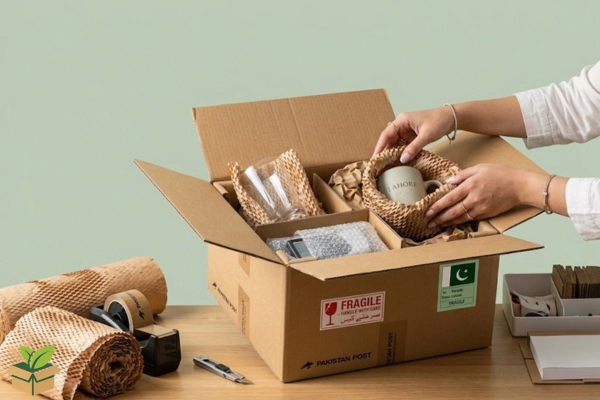
How to Pack Fragile Items for Shipping in Pakistan: 10 Steps for Damage-Free Delivery
Learning how to pack fragile items for shipping in Pakistan can save you from broken products, unhappy customers, refund requests, and unnecessary courier disputes. Whether you are sending glassware from Lahore, electronics from Karachi, ceramics from Islamabad, or handmade products to customers across the country, your parcel may experience stacking pressure, vibration, sudden movement, moisture, and rough courier handling. Safe delivery therefore depends on more than adding a fragile sticker—it requires the right box, proper cushioning, secure sealing, and careful testing.
For Pakistani online sellers, packaging is also part of the customer experience. A product that arrives safely builds trust, while a cracked or damaged item can quickly result in negative reviews and lost repeat business.
This fragile goods shipping guide explains the best way to pack fragile items, choose suitable materials, seal parcels correctly, and prepare breakable products for domestic or international delivery.
Why Safe Packaging for Fragile Items Matters
Fragile products can be damaged at several points during shipping. A parcel may be dropped during pickup, pushed across a warehouse floor, compressed under heavier boxes, or shaken during road transportation.
These risks can be higher on long domestic routes, particularly when a shipment travels through multiple sorting facilities before reaching its destination.
Proper fragile item packaging in Pakistan helps you:
- Reduce cracks, dents, scratches, and breakage
- Prevent movement during transit
- Protect products from impact and vibration
- Minimise customer complaints and returns
- Lower replacement and reshipping costs
- Improve customer satisfaction
- Build a professional brand image
- Support damage claims with better packing evidence
- Achieve more consistent, damage-free delivery
A “Handle with Care” label is useful, but it is not a substitute for protective packaging. Your parcel should be packed strongly enough to withstand normal courier handling even if the warning label is overlooked.
Essential Packing Materials for Fragile Items
The right materials create multiple layers of protection. Each layer performs a different job: surface protection, shock absorption, movement control, structural support, or moisture resistance.
You can browse practical packaging materials for shipping and moving before preparing your parcel.
Corrugated Cardboard Box
A strong corrugated cardboard box provides structural protection against impact and stacking pressure. Avoid thin, worn, damp, punctured, or previously crushed cartons.
For heavy, delicate, or high-value goods, use a double-wall shipping box. It offers better compression resistance than a lightweight single-wall carton.
Pakistani online businesses can also explore e-commerce shipping boxes in different sizes for regular order fulfilment.
Bubble Wrap
Bubble wrap absorbs shock and helps protect delicate surfaces. It is particularly useful for:
- Glassware and ceramics
- Electronics packaging
- Cosmetic bottles
- Decorative products
- Small appliances
- Framed items
- Artwork shipping
Wrap the bubbles toward the product so they can cushion its surface. Use multiple layers of bubble wrap around vulnerable areas such as handles, corners, rims, and screens.
For regular shipping, a protective bubble wrap roll can make the packing process faster and more consistent.
Void-Filling Materials
A void filling material occupies empty space inside the box and stops the item from moving. Common options include:
- Crumpled packing paper
- Shredded paper
- Corrugated paper inserts
- Honeycomb paper wrap
- Packing peanuts
- Foam sheets
- Air pillows
- Cardboard dividers
- Moulded paper pulp
- Corner protectors
Air pillows are lightweight, but they may not be strong enough for heavy objects. Packing peanuts can fill irregular spaces, though paper-based alternatives may be easier to recycle.
Strong Packaging Tape
Use reliable packaging tape rather than office tape, masking tape, string, or decorative tape. Strong adhesive tape helps maintain secure box sealing during transit.
A practical option is 2-inch clear packaging tape, which provides a wide sealing surface for cardboard parcels.
Labels and Documentation
Prepare:
- A clear shipping label
- Sender and recipient details
- Fragile stickers
- A “Handle with Care” label
- Orientation arrows when required
- Courier documentation
- Customs documents for international shipping
Place a duplicate address or order slip inside the parcel. If the external label becomes damaged, the internal document may help identify the shipment.
How to Pack Fragile Items for Shipping in Pakistan Step by Step
Successful packing of fragile items for shipping follows a layered process. Do not rely on one material to perform every protective function.
Step 1: Assess the Product’s Risk
Before choosing a box, inspect the item and identify its vulnerable areas.
Consider:
- Is it made from glass, ceramic, thin plastic, or another breakable material?
- Does it have handles, corners, buttons, screens, or moving components?
- Can its surface be scratched?
- Is it hollow or solid?
- Does it contain a liquid?
- How much does it weigh?
- Is it expensive, rare, or difficult to replace?
- Will it travel through several cities or internationally?
A ceramic mug needs protection around its handle and hollow centre. A framed print needs corner protection and a rigid surface layer. An electronic device may require anti-static protection in addition to shock absorption.
The packaging method should match the product rather than applying one generic process to every order.
Step 2: Select the Appropriate Box Size
The box should be larger than the wrapped product, but not excessively oversized. You need enough space for cushioning on all sides without creating a huge empty area.
As a practical starting point, leave several centimetres of cushioning around the item. Increase the protective space for heavier, more delicate, or high-value products.
A box that is too small cannot hold sufficient shock-resistant packaging. A box that is too large increases:
- Product movement
- Void-fill consumption
- Package weight
- Dimensional shipping charges
- Risk of box collapse
For more detail, read this guide on choosing the right box size for e-commerce shipping.
Always measure the item after wrapping it. Record the final box dimensions and weight because couriers may calculate charges using physical or volumetric weight.
Step 3: Reinforce the Bottom of the Box
Turn the empty carton upside down and seal the bottom before inserting anything.
Use the H-taping method:
- Apply tape along the centre seam.
- Tape one open edge where the flaps meet the box.
- Tape the opposite edge.
- Add another centre strip for heavy parcels when necessary.
This creates an “H” shape and protects the three main openings. Weak bottom sealing can cause the contents to fall out even when the internal cushioning is excellent—an unfortunate plot twist no seller wants.
Step 4: Create a Cushioned Base
Add a protective layer to the bottom of the box before placing the product inside.
Suitable materials include:
- Crumpled kraft paper
- Corrugated inserts
- Honeycomb paper
- Foam sheets
- Moulded pulp
- Packing peanuts
The base should be firm enough to absorb shock without flattening immediately under the product’s weight. Heavy goods need dense cushioning, while lighter items can use paper-based void fill or air pillows.
Step 5: Wrap Every Item Separately
If a parcel contains multiple fragile items, wrap each product individually. Products should not touch one another because direct contact can cause cracks during vibration or sudden impact.
To wrap an item:
- Cover delicate surfaces with soft paper or a protective sleeve.
- Add bubble wrap or recyclable padded material.
- Reinforce corners, handles, rims, and protruding parts.
- Secure the wrapping with a small amount of tape.
- Make sure the tape does not touch a delicate or finished surface.
For hollow items such as cups and vases, place crumpled paper inside to support the structure. Do not overfill the cavity, as excessive pressure may also cause damage.
For plates, tiles, and flat glass items, use cardboard dividers between pieces. Where possible, pack plates vertically rather than stacking them flat.
Step 6: Position the Product in the Centre
Place the wrapped item in the middle of the carton, away from every outer wall.
Add protective cushioning:
- Under the product
- Above the product
- On both sides
- Around corners
- Between individual items
The aim is to create a protective zone that absorbs drop and vibration forces before they reach the product.
Avoid placing a heavy item above a lighter fragile item. If products have significantly different weights or shapes, separate boxes may provide better damage protection.
Step 7: Fill Every Empty Space
Empty space inside the box allows the contents to accelerate before hitting an internal wall. Even a thick layer of bubble wrap may fail if the product can move freely.
Fill gaps with packing paper, corrugated pieces, air pillows, or another suitable material. Pay attention to narrow spaces beside the product and the area below the top flaps.
The fill should stop movement without putting excessive pressure on fragile surfaces.
Use the gentle shake test:
- Close the flaps without taping them.
- Move the box carefully from side to side.
- Listen and feel for movement.
- Add more cushioning if anything shifts or rattles.
A properly packed product should remain stable in the centre of the carton.
Step 8: Use the Double Boxing Method When Needed
The double boxing method places the packed inner box inside a larger outer shipping box. It provides an additional buffer against crushing, drops, and punctures.
Double boxing is recommended for:
- Expensive electronics
- Glass collections
- Artwork
- Sensitive instruments
- Heavy ceramic products
- Long-distance shipping
- International shipping from Pakistan
- Valuable or irreplaceable items
First, wrap and secure the product in the inner carton. Then place that carton inside a larger double-wall box with cushioning around all six sides.
The inner carton must not touch the outer walls. Otherwise, impact can pass directly through both boxes.
Step 9: Seal the Package Securely
Once the product passes the shake test, close the top flaps and repeat the H-taping method.
For secure packaging for courier delivery:
- Tape the central seam
- Tape both side seams
- Reinforce weak edges
- Do not leave loose tape ends
- Avoid wrapping the entire box in unnecessary layers of plastic
- Keep the shipping label area flat and readable
For valuable orders, consider tamper-proof packaging or tamper-evident tape. For moisture-sensitive products, add an appropriate internal moisture barrier rather than assuming external plastic alone will protect a weak carton.
Step 10: Label, Photograph, and Weigh the Parcel
Attach the shipping label to the largest flat surface. Remove or cover old barcodes and labels if you are reusing a suitable box.
To label a fragile package correctly:
- Apply fragile warning labels on visible sides
- Add a “Handle with Care” label
- Use “This Side Up” arrows where orientation matters
- Keep labels away from seams and corners
- Protect printed information from moisture
- Make the recipient’s phone number easy to read
- Ensure the barcode is not folded or covered by reflective tape
Before handover, photograph:
- The unwrapped product
- The wrapping layers
- The item inside the box
- The filled empty spaces
- The sealed carton
- The final label and parcel condition
These photographs may help document the product’s condition if a damage claim is required.
Finally, measure the package weight and box dimensions. Accurate information prevents billing issues and allows you to compare shipping options properly.
How to Pack Different Types of Fragile Products
Different materials fail in different ways. Adjust your packing method to the item’s structure, weight, and sensitivity.
How to Pack Glass Items for Shipping
Glass requires surface protection, shock absorption, and movement control.
Follow these steps:
- Wrap each glass item separately.
- Fill hollow spaces lightly with crumpled paper.
- Add extra padding around rims, stems, and handles.
- Separate items with cardboard dividers.
- Keep glass away from the outer walls.
- Use a double-wall carton for heavy sets.
- Double-box expensive or highly delicate glassware.
Do not allow glass pieces to touch. Newspaper ink may transfer to some surfaces, so clean kraft packing paper is often a safer choice.
How to Pack Ceramics and Crockery
Wrap each plate, bowl, mug, or decorative object individually. Add paper inside bowls and mugs, then use bubble wrap externally.
For plate sets:
- Place a soft layer between each plate.
- Wrap small stacks securely.
- Use rigid cardboard separators.
- Position plates vertically when practical.
- Cushion the box on all six sides.
Ceramic handles and decorative extensions need additional reinforcement because they can snap even when the main body survives.
How to Pack Electronics
Use the original manufacturer’s packaging whenever it is still strong and complete. Otherwise:
- Back up important data.
- Switch off and disconnect the device.
- Remove loose accessories.
- Protect screens with a soft, non-abrasive layer.
- Use anti-static material when appropriate.
- Wrap accessories separately.
- Prevent the device from moving.
- Consider double boxing.
Do not apply adhesive tape directly to screens or finished surfaces. Ask the courier about restrictions for batteries, especially lithium batteries, before booking the shipment.
How to Pack Artwork, Frames, and Mirrors
Protect the front surface with non-abrasive paper, glassine, or a suitable protective sheet. Add rigid boards to both sides and use corner protectors.
For glass-fronted frames:
- Protect the glass surface
- Wrap the entire frame
- Add reinforced corners
- Place it in a fitted inner carton
- Use double boxing for valuable pieces
- Mark orientation clearly
Large mirrors and valuable artwork may need wooden crating or a specialist fragile item courier service rather than ordinary parcel delivery.
How to Pack Bottles and Liquids
Check whether the courier accepts the liquid before packing it.
When accepted:
- Tighten and secure the cap.
- Seal around the closure.
- Put the bottle in a leak-resistant bag.
- Add absorbent material.
- Wrap the bottle individually.
- Keep bottles separated with dividers.
- Use waterproof internal protection.
- Pack the bottle upright when required.
Waterproof parcel packaging should contain leaks, but it must still include impact protection.
Courier Packaging Guidelines in Pakistan
Courier company requirements can vary by service, destination, product category, declared value, and transportation method. Always confirm the current rules directly with your selected courier before dispatch.
Ask the courier:
- Does the service accept glass, liquids, electronics, or artwork?
- Are fragile products excluded from compensation?
- Is shipping insurance available?
- What proof is required for a damage claim?
- Are there package weight or dimension limits?
- Are batteries restricted?
- Is wooden crating required for certain goods?
- Are “Fragile” or orientation labels recognised?
- Can the parcel be opened for inspection?
- What documentation is needed for international shipping?
When evaluating a fragile items delivery service in Pakistan, do not compare price alone. Consider tracking, handling procedures, delivery coverage, claim policies, customer support, and insurance options.
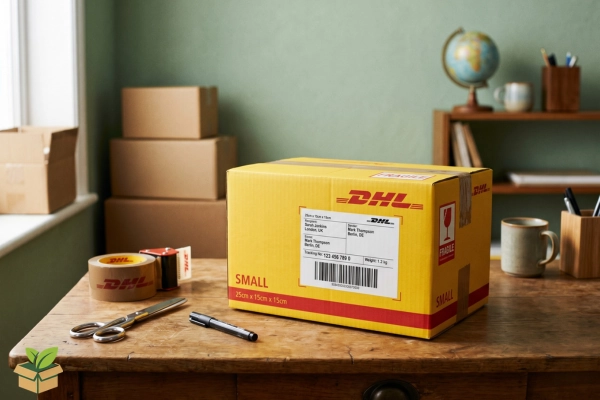
For express or international parcels, this overview of DHL shipping boxes and packing considerations provides additional guidance. Carrier policies can change, so verify the latest terms before shipping.
Shipping Insurance for Valuable Items
Shipping insurance can reduce financial risk, but coverage is not automatic protection against every type of damage.
Before purchasing insurance:
- Declare the item accurately.
- Keep the purchase invoice or proof of value.
- Read excluded-item and fragile-item clauses.
- Ask whether packaging standards affect eligibility.
- Photograph the packing process.
- Save booking receipts and tracking details.
- Report visible damage promptly.
Some policies may reject claims where the packaging is considered insufficient. Insurance should support careful packing, not replace it.
Eco-Friendly Fragile Packaging Options
Safe packaging for fragile items does not always require excessive plastic. Businesses can reduce waste while maintaining product protection.
Consider using:
- Recycled corrugated cardboard boxes
- Right-sized cartons
- Recycled kraft paper
- Honeycomb paper wrap
- Shredded cardboard
- Corrugated dividers
- Moulded paper-pulp inserts
- Reusable boxes
- Paper-based tape where suitable
- Minimal plastic reserved for products that genuinely need it
The priority is to prevent damage because replacing a broken product creates additional manufacturing, packaging, and transport waste.
Use the smallest safe box—not simply the smallest possible box. Avoid unnecessary layers while maintaining enough cushioning to protect items from impact.
For a broader sustainability strategy, read what eco-friendly packaging is and why it matters in Pakistan.
Fragile Parcel Packing Tips for Online Sellers
Reliable packaging is especially important for e-commerce product packaging in Pakistan. A consistent system can lower packing costs and improve order accuracy.
Create Product-Specific Packing Standards
Prepare a simple packing guide for each product type. It should specify:
- Recommended box size
- Number of wrapping layers
- Type of void fill
- Divider requirements
- Tape placement
- Labels required
- Whether double boxing is necessary
- Final acceptable parcel weight
This prevents different team members from packing the same product in completely different ways.
Test Before Shipping at Scale
Before sending hundreds of orders, test the packed box.
Perform controlled internal checks such as:
- Gentle shake testing
- Short-distance transport testing
- Compression observation
- Corner and edge inspection
- Limited, controlled handling simulations
Do not perform an aggressive drop test on a customer’s actual order. Use a sample product or test unit instead.
Track Damage by Product and Route
Record:
- Product type
- Box size
- Packing material used
- Courier
- Destination city
- Damage type
- Claim result
- Replacement cost
This data helps identify whether the problem comes from the product design, box strength, cushioning, sealing, or courier route.
Online sellers can also review the guide to the best e-commerce boxes for Pakistani businesses.
Common Fragile Packaging Mistakes to Avoid
Even expensive packing material can fail when used incorrectly.
Avoid these mistakes:
- Choosing a weak or damaged carton
- Using a box that is too large
- Allowing products to touch each other
- Leaving empty space inside the box
- Placing fragile items against an outer wall
- Using air pillows for extremely heavy products
- Relying only on fragile stickers
- Applying too little packaging tape
- Overpacking until pressure damages the product
- Failing to protect corners and handles
- Shipping liquids without leak containment
- Ignoring package weight and box dimensions
- Reusing a box that has lost structural strength
- Failing to check courier company requirements
- Sending valuable goods without documenting the packing process
For more practical examples, see these packaging mistakes small businesses should avoid.
Final Pre-Shipping Checklist
Before handing your parcel to the courier, confirm the following:
- The product is clean, complete, and undamaged.
- Each item is wrapped individually.
- Fragile corners, rims, screens, and handles are reinforced.
- The box is strong and appropriately sized.
- Cushioning protects all six sides.
- No item touches the outer carton.
- Empty spaces are filled.
- The product does not move during the shake test.
- The bottom and top use secure H-taping.
- Old labels and barcodes have been removed.
- The address and phone number are correct.
- Fragile and orientation labels are visible.
- The parcel has been photographed.
- Weight and dimensions are accurate.
- Courier acceptance and insurance conditions are confirmed.
- A duplicate address or order document is inside.
Conclusion: Pack for the Journey, Not Just the Product
The best way to ship fragile items safely is to build several layers of protection. Start with a strong, correctly sized corrugated box. Wrap every item individually, reinforce vulnerable areas, add protective cushioning on all sides, fill every gap, seal the carton securely, and apply clear handling instructions.
Most shipping damage is not caused by one dramatic accident. It usually happens because a product can move, the box is weak, the corners are exposed, or the cushioning is unsuitable for the item’s weight. A repeatable packing process addresses these risks before the parcel leaves your hands.
For dependable fragile item packaging in Pakistan, explore Eco Packaging’s online shop for shipping boxes, bubble wrap, packaging tape, and protective materials. Choose the right supplies, follow a consistent packing standard, and give every customer the damage-free unboxing experience your product deserves.
Frequently Asked Questions
How do you pack fragile items for shipping in Pakistan?
Use a strong corrugated cardboard box, wrap every item separately, add cushioning on all six sides, fill empty spaces, perform a shake test, and seal the box using the H-taping method. Add clear address, fragile, and orientation labels before courier handover.
Is bubble wrap enough for fragile items?
Bubble wrap protects against impact and surface damage, but it is not usually enough by itself. You also need a strong box, bottom cushioning, suitable void fill, movement control, and secure sealing.
How much cushioning should be placed around a fragile item?
Leave several centimetres of cushioning around all sides as a practical starting point. Heavy, valuable, or extremely delicate items may need thicker protection or double boxing. The correct amount depends on the item’s weight and fragility.
Which box is best for shipping breakable products?
A new, correctly sized corrugated box is suitable for many items. Use a double-wall shipping box for heavy, valuable, or highly fragile products. The item should not touch any outer wall.
Should I write “Fragile” on a courier parcel?
Yes, use fragile stickers or a “Handle with Care” label on visible surfaces. However, labels do not guarantee special handling and should never replace proper internal protection.
Can glass items be sent by courier in Pakistan?
Some courier services accept glass items, while others restrict them or exclude them from compensation. Confirm acceptance, packing requirements, declared-value rules, and insurance terms before shipping.
What is double boxing?
Double boxing means placing a fully packed inner carton inside a larger outer carton with cushioning between both boxes. It provides extra protection against drops, crushing, vibration, and punctures.
How can online sellers prevent shipping damage?
Use product-specific packing standards, select the correct box size, train staff, test packaging, document parcels with photographs, track damage by product and courier route, and improve materials based on actual results.























(0) Comments