
🥗 How to Choose Food-Grade Plastic Containers in Pakistan: The Complete Buying Guide
If you’ve ever stood in a kitchenware aisle in Karachi, Lahore, or Islamabad, staring at a wall of plastic containers wondering which ones are actually safe to store your food in, you’re not alone. Choosing the right food-grade plastic containers in Pakistan has become surprisingly tricky, thanks to a flooded local market where genuine BPA-free products sit right next to cheap, unmarked alternatives that look identical but behave very differently once they meet hot food or a microwave. This guide walks you through exactly what to look for, which materials are trustworthy, what certifications matter, and how to avoid the common traps that leave families and food businesses stuck with containers that leach chemicals, warp under heat, or simply don’t last.
By the end of this article, you’ll know exactly how to separate genuinely food-safe plastic storage containers from the risky, low-quality ones — whether you’re shopping for your home kitchen or sourcing packaging in bulk for a restaurant or bakery.
🔬 Why “Food-Grade” Actually Matters
Not all plastic is created equal, and this is where most buyers in Pakistan go wrong. A container might look sturdy and feel premium in hand, yet still be made from industrial-grade or recycled plastic never intended to touch food. The term “food-grade” specifically means the material has been tested and approved to safely come into contact with edible items without transferring harmful chemicals, odors, or particles into your meals.
This distinction becomes especially important when food is hot, acidic, or oily — three conditions that accelerate chemical migration from low-quality plastics. Think of tomato-based curries stored in a container overnight, or hot biryani packed straight into a box after cooking. If that container isn’t rated for food contact, compounds like BPA (Bisphenol A) or phthalates can leach directly into what you’re about to eat. Over time, repeated exposure to these substances has been linked to hormonal disruption and other health concerns, which is exactly why food safety standards exist in the first place.
For Pakistani households and food businesses alike, understanding this one concept — genuine food-grade material versus generic plastic — is the single most important filter you’ll apply before anything else.
🧪 Understanding Plastic Types: HDPE, PET, PP, and What They Mean for You
Every food-safe plastic container carries a small triangular recycling symbol with a number from 1 to 7 stamped somewhere on its base. Most people ignore this completely, but it’s actually the fastest way to identify what you’re buying.
Here’s a simplified breakdown of the plastic types you’ll commonly encounter when shopping for food-safe plastic storage containers in Pakistan:
| Plastic Type | Resin Code | Best Use Case | Heat Tolerance |
|---|---|---|---|
| PET (Polyethylene Terephthalate) | 1 | Water bottles, single-use jars | Low — not microwave-safe |
| HDPE (High-Density Polyethylene) | 2 | Milk containers, storage buckets | Moderate |
| PVC (Polyvinyl Chloride) | 3 | Rarely used for food — avoid | Poor, can leach chemicals |
| LDPE (Low-Density Polyethylene) | 4 | Squeeze bottles, flexible pouches | Moderate |
| PP (Polypropylene) | 5 | Microwave-safe lunch boxes, deli containers | High — best all-rounder |
| PS (Polystyrene) | 6 | Disposable cups, cutlery | Low, avoid for hot food |
| Other/Mixed | 7 | Varies — check labeling carefully | Depends on blend |
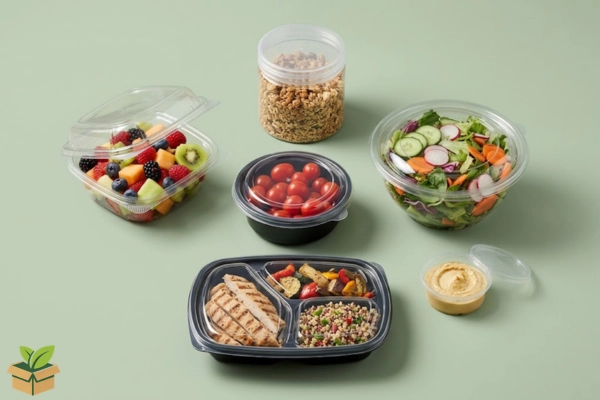
If there’s one takeaway from this table, it’s this: Polypropylene (PP), marked with resin code 5, is generally considered the gold standard for reusable food containers because it withstands heat well, resists staining, and doesn’t easily absorb odors. This is why most reputable HDPE vs PET containers comparisons in the food packaging industry consistently favor PP or HDPE for anything that goes into a microwave or freezer. For businesses specifically looking at disposable options, our range of deli containers is built on food-contact-safe polymers designed for exactly this kind of daily use.
🏛️ Certifications and Standards You Should Actually Check
Here’s where things get a little more technical, but stick with me because this part protects you the most. In Pakistan, food-contact plastic products should ideally comply with standards set by the PSQCA (Pakistan Standards and Quality Control Authority), which regulates quality benchmarks for consumer goods including packaging materials. Internationally, two other bodies often referenced on quality product packaging are the FDA (U.S. Food and Drug Administration) and the EFSA (European Food Safety Authority), both of which maintain strict guidelines around food-contact polymers and permissible chemical migration limits.
For containers being used in halal food businesses — a significant consideration in Pakistan — checking for relevant halal certification alongside food-grade material verification adds another layer of trust, especially for packaging used in meat, dairy, or ready-to-eat product lines.
Realistically, many locally sold containers won’t display formal certification numbers, which means your best defense is learning to read labels carefully and buying from established suppliers rather than unmarked bulk stock. A container explicitly labeled “BPA-free,” stamped with a resin code, and sold by a known brand or supplier is almost always a safer bet than an unbranded alternative priced suspiciously low.
✅ Features That Separate Good Containers From Risky Ones
Once you’ve confirmed the material is genuinely food-safe, the next layer of decision-making comes down to functionality. This is where airtight food containers in Pakistan really start to differentiate themselves from basic storage boxes.
A few practical features worth prioritizing:
- Airtight sealing with a proper gasket — prevents leaks and keeps food fresher for longer, especially important for liquids and marinated items.
- Microwave-safe and freezer-safe labeling — confirms the container can handle temperature swings without warping or releasing chemicals.
- Dishwasher-safe design — saves time and confirms the plastic can tolerate repeated heat and detergent exposure.
- Stackable shape — genuinely useful for anyone dealing with limited kitchen or fridge space, which, let’s be honest, is most of us.
Beyond these, odor resistance is an underrated feature that many buyers overlook until they’ve stored something pungent — like pickles or spiced curries — and the smell never quite disappears. Good-quality PP containers tend to handle this far better than cheaper alternatives.
If you’re running a food business rather than shopping for home use, containers like our black plastic food containers are specifically engineered with leak-proof lids and food-contact-safe material, making them a reliable choice for takeaway and delivery orders where presentation and containment both matter.
🍱 Matching Containers to Your Actual Use Case
One mistake people repeatedly make is buying a single “universal” container style for every purpose, when in reality, different foods and different storage needs call for different container types. Meal prep containers built for portioning cooked meals aren’t necessarily the best choice for storing bulk dry goods like rice or flour, and vice versa.
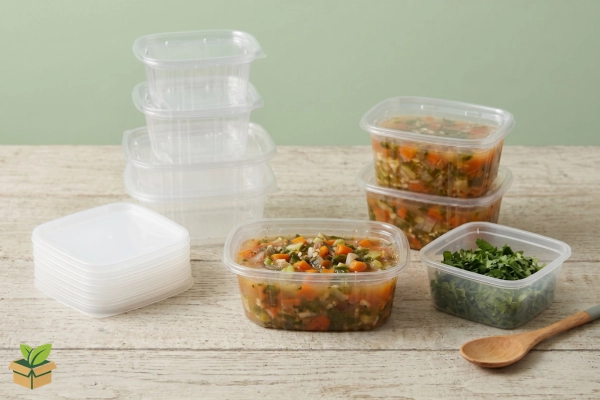
For everyday kitchen organization, HDPE-based storage boxes tend to work well for bulk food storage — think lentils, sugar, or flour — where you’re mostly concerned with keeping moisture and pests out rather than dealing with heat exposure. On the other hand, for anything going through repeated heating cycles, such as daily office lunches, PP-based containers with secure, vacuum-sealed lids are far more practical.
If your needs lean toward liquids or semi-liquid products like sauces, pickles, or homemade preserves, round plastic jars offer a more reliable seal than rectangular boxes, largely because circular geometry distributes lid pressure more evenly. We’ve actually covered this exact topic in more depth in our guide on round plastic jars for food and cosmetics, which breaks down sizing options depending on what you’re storing.
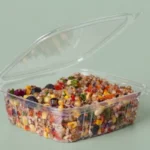
For businesses handling fresh produce or ready-to-eat salads, transparent, food-safe salad bowl packaging with secure lids helps maintain both freshness and visual appeal — something that matters a lot when customers are choosing between competing food brands on a delivery app.
🛒 Where to Buy Food-Grade Plastic Containers in Pakistan
The good news is that sourcing reliable, food-safe containers in Pakistan has become considerably easier in recent years. Major online marketplaces like Daraz.pk carry a wide range of options, though quality does vary significantly between sellers, so checking reviews and material descriptions before ordering is essential. Physical retailers such as Metro Cash & Carry and Imtiaz Super Market also stock recognizable international brands like Tupperware and Lock&Lock, both of which have built strong reputations around BPA-free, certified food-contact materials.
For businesses needing bulk quantities — restaurants, cloud kitchens, bakeries, or grocery packaging operations — working directly with a dedicated packaging supplier tends to be far more cost-effective than buying retail. This is exactly where a supplier specializing in food-grade plastic containers price in Pakistan at wholesale rates becomes valuable, since bulk sourcing eliminates the markup that retail channels add. You can browse our full range of food-grade containers if you’re comparing options for restaurant, bakery, or retail packaging needs.
💰 What Should You Expect to Pay?
Pricing for food-grade plastic containers in Pakistan varies quite a bit depending on size, brand, and intended use. Here’s a general sense of what the local market typically looks like:
| Container Type | Typical Price Range (PKR) | Best For |
|---|---|---|
| Small disposable deli containers (250–500ml) | Rs. 5–15 per piece (bulk) | Takeaway, single-serve portions |
| Medium reusable food storage boxes (750ml–1L) | Rs. 80–250 per piece | Meal prep, leftovers, fridge storage |
| Large bulk storage containers (2L+) | Rs. 200–600 per piece | Dry goods, grocery packaging |
| Branded airtight sets (Tupperware/Lock&Lock) | Rs. 800–3,500 per set | Long-term kitchen use, gifting |
These figures naturally fluctuate based on order volume and current plastic resin prices, but they give you a realistic baseline for budgeting whether you’re buying a handful of containers for home use or sourcing in bulk for a growing food business.
⚠️ Common Mistakes to Avoid When Buying
Even with all this information in hand, a few recurring mistakes trip up buyers again and again. Reusing single-use containers — the kind that come with takeaway orders — as long-term storage solutions is one of the most common ones, since these are typically made from thinner, lower-grade plastic never intended for repeated heating or washing cycles. Another frequent error is ignoring visible warning signs like a strong plastic smell straight out of the packaging, cloudy discoloration after just a few uses, or a lid that no longer seals properly after minimal use — all of which point to inferior material quality.
Price obsession is another trap worth mentioning. The cheapest option on a marketplace listing is rarely the safest, and the small amount saved upfront often gets outweighed by the health risk of chemical leaching in plastics or simply having to replace containers every few months. If you’re building a packaging strategy for a business rather than a household, it’s worth reading through our broader breakdown of common packaging mistakes that small businesses in Pakistan tend to make, since several of these principles overlap directly with container selection.
🌱 A Quick Note on Sustainability
While this guide focuses primarily on safety and functionality, it’s worth acknowledging that the conversation around plastic containers in Pakistan is gradually shifting toward more sustainable alternatives. Reusable containers, when chosen correctly, actually reduce long-term plastic waste compared to constantly buying disposable options — which is a meaningful shift for anyone trying to make more environmentally conscious choices without sacrificing convenience. If this resonates with you, our article on eco-friendly packaging and why it matters in Pakistan explores this shift in much more detail.
🎯 Final Takeaways
Choosing the right food-grade plastic containers in Pakistan really comes down to three things working together: verified food-safe material, functional features that match your actual use case, and buying from sources you can genuinely trust rather than chasing the lowest price tag. Whether you’re stocking a home kitchen with reliable, reusable storage or sourcing bulk packaging for a growing food business, applying the checks covered in this guide — material type, certification cues, airtight design, and appropriate heat tolerance — will consistently steer you toward safer, longer-lasting choices.
If you’re ready to source containers that check all these boxes without the guesswork, explore our complete collection of food-grade plastic containers and get in touch with our team for bulk pricing tailored to your business.
❓ Frequently Asked Questions
Q1: How can I tell if a plastic container is genuinely food-grade in Pakistan? Check for a resin code (1–7) stamped on the base, look for “BPA-free” labeling, and prefer products from established brands or suppliers rather than unmarked bulk stock.
Q2: Which plastic type is safest for storing hot food? Polypropylene (PP), marked with resin code 5, handles heat best among common plastics and is widely used in microwave-safe containers.
Q3: Are cheap plastic containers from local markets safe to use? Not always. Many cheap containers are made from industrial-grade or recycled plastic that isn’t rated for food contact, increasing the risk of chemical leaching, especially with hot or acidic foods.
Q4: What’s the price range for food-grade plastic containers in Pakistan? Prices typically range from Rs. 5 per piece for bulk disposable containers to Rs. 3,500+ for branded airtight sets, depending on size, brand, and quantity.
Q5: Can I reuse takeaway food containers for long-term storage? It’s not recommended. Most takeaway containers are designed for single or short-term use and degrade quickly with repeated washing or heating.










(0) Comments